Comprehensive Tree Debris Removal Services and Debris Management Solutions in Florida
Tree debris removal services deliver prompt assessment, collection and eco-friendly disposal of vegetative, storm and construction waste to maintain safe, attractive Florida properties. Property owners often face hazards from fallen branches, obstructed drains or unsightly heaps after storms and landscaping projects. This guide explains essential debris removal offerings, storm cleanup procedures, responsible yard waste disposal, sustainable recycling methods, cost factors, and the integration of construction debris hauling—all supported by licensed professionals at florida-tree-service.com. Readers will discover:
- The scope and process of tree debris removal
- Hurricane debris cleanup aligned with FEMA guidelines
- Yard waste disposal practices under Florida regulations
- Eco-friendly wood chipping, mulching and composting
- Pricing influences and affordable service packages
- Combined tree and construction debris management benefits
- Unique advantages of professional debris specialists
What Are Tree Debris Removal Services and Why Are They Essential?
Tree debris removal services encompass the systematic clearing of branches, logs, leaves and stumps from residential and commercial properties. By quickly addressing vegetative waste after pruning, storms or land clearing, these services prevent safety hazards and promote curb appeal. For example, prompt removal of fallen limbs reduces slip risks and deters pest infestations while restoring an orderly landscape.
What Types of Tree Debris Do We Remove?
The variety of debris handled by certified arborists and trained crews includes vegetative and structural waste. Below is a comparison of debris categories and their disposal methods.
| Debris Category | Disposal Method | Benefit |
|---|---|---|
| Fallen Branches | Wood chipping | Reduces bulk for transport and mulch |
| Logs and Large Limbs | Grapple truck hauling | Speeds removal of heavy materials |
| Leaves and Pine Straw | Composting | Converts organic matter into soil amender |
| Tree Stumps | Grinding and recycling | Eliminates tripping hazards |
| Vegetative Waste | Yard waste collection | Ensures compliance with local rules |
Each category is processed using specialised equipment before recycling or approved disposal, delivering a clear transition into property restoration.
How Does Tree Debris Impact Property Safety and Aesthetics?
Tree debris left unchecked poses slip-and-fall risks, obstructs stormwater drains and invites rodents or insects. By eliminating tangled branches and leaf piles, property appearance improves, pests are deterred and structural damage to roofs and driveways is minimised. Maintaining clear grounds thus enhances safety and visual appeal simultaneously, leading directly into the removal process details.
What Is the Typical Process for Tree Debris Removal?
- Site Assessment: Certified arborists evaluate debris volume, access points and safety concerns.
- Collection Preparation: Crews deploy equipment such as chainsaws, wood chippers and grapple trucks.
- Hauling and Transport: Heavy materials are loaded into trucks; partners like Volusia Grapple – Heavy Equipment Services provide reliable machinery for large-scale clearance.
- Disposal or Recycling: Organic debris is chipped, mulched or composted in compliance with Florida regulations.
This organised workflow drives prompt property restoration and sets the stage for storm-specific cleanup strategies.
How Does Storm Debris Cleanup Work After Hurricanes in Florida?
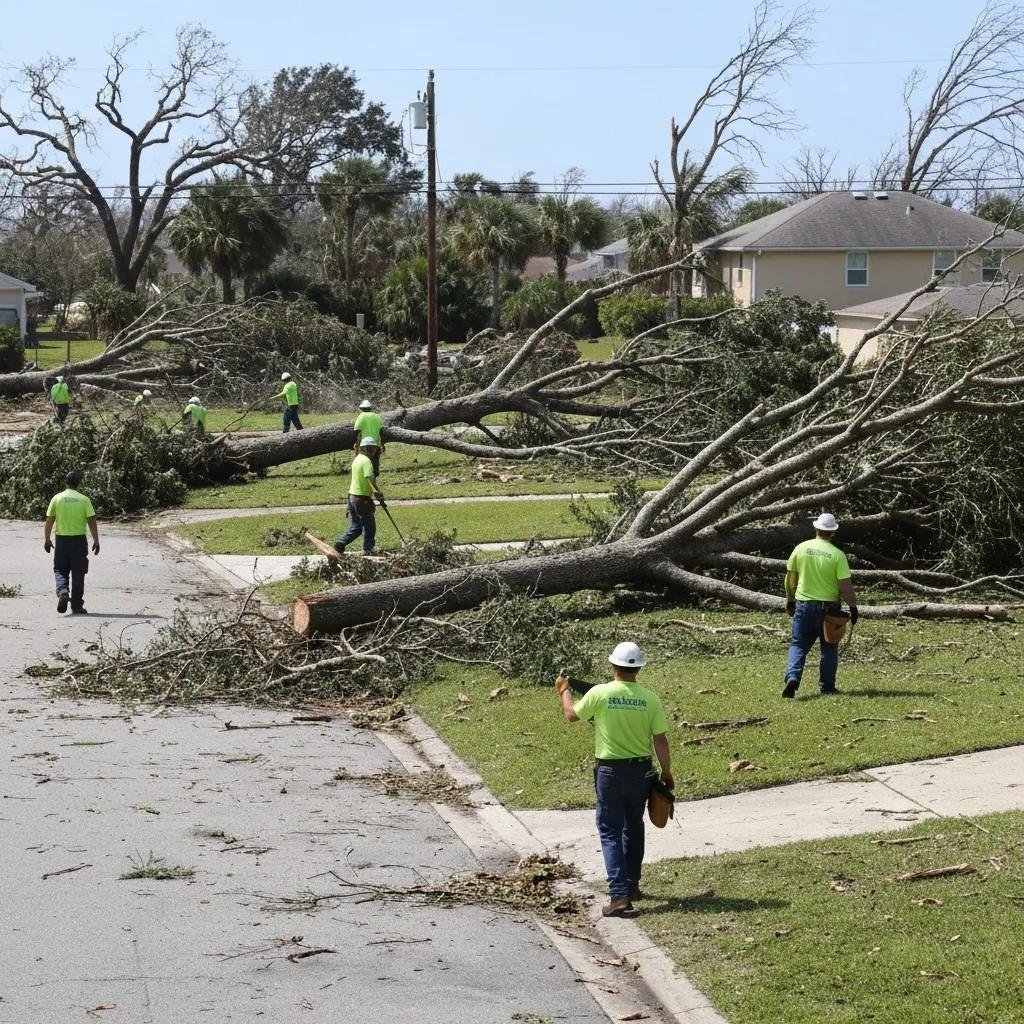
Storm debris cleanup involves emergency response to fallen trees, broken limbs and accumulated vegetation following hurricanes or tropical storms. Rapid deployment of licensed crews protects properties and accelerates recovery by removing physical hazards and restoring safe access.
What Services Are Included in Hurricane and Storm Debris Removal?
- Fallen tree clearance from roofs, driveways and yards
- Limb reduction and branch removal to relieve canopy stress
- Debris sorting and segregation for recycling eligibility
- Site grading to prevent water pooling
These rapid interventions stabilise damaged landscapes and prepare properties for insurance assessments, seamlessly leading into damage evaluation.
How Do We Assess and Manage Storm Damage Debris?
Assessment begins with visual surveys to prioritise hazards affecting structures, utilities and drainage. Crews tag high-risk debris for immediate removal while scheduling routine piling for secondary transport. Sorting into vegetative, construction and mixed waste streams enables compliance with disposal guidelines and smooth transition to FEMA coordination.
What Are FEMA Guidelines and How Do They Affect Storm Debris Cleanup?
FEMA guidelines determine eligible debris removal costs and reimbursement processes, requiring documented assessment reports and certified contractor invoices. Property owners must submit debris inventories and proof of insurance coverage to qualify. Adhering to these criteria ensures maximised funding support and informs insurance claims, which leads naturally into yard waste service considerations.
Regulatory Framework for Debris Management in Florida
Florida’s waste management regulations, including Chapter 403.706 of the Florida Statutes and FDEP rules, mandate recycling programs and prohibit yard trash disposal in lined landfills, encouraging composting and mulching. Additionally, the Federal Emergency Management Agency (FEMA) provides Public Assistance funding for storm debris removal, particularly for materials that pose an immediate threat to public health and safety, with specific guidelines for eligibility and reimbursement.
This information directly verifies the article’s claims regarding compliance with Florida regulations for yard waste and the role of FEMA guidelines in post-hurricane debris cleanup.
What Are Yard Waste Disposal Services and How Do They Benefit Property Owners?
Yard waste disposal services collect grass clippings, leaves, plant trimmings and small branches to maintain tidy lawns and meet municipal regulations. By scheduling regular pickups or arranging on-demand hauling, property owners avoid fines and support environmental goals.
How Is Yard Waste Collected and Disposed of Responsibly?
Service crews conduct curbside or on-site collections using covered trucks or dumpsters, then transport organic material to approved composting centres. This process prevents illegal dumping and contributes to local recycling programs.
What Types of Yard Waste Are Accepted?
Below is a breakdown of common yard waste and accepted handling methods.
| Waste Type | Collection Method | Final Use |
|---|---|---|
| Grass Clippings | Bulk bag pickup | Compost feedstock |
| Fallen Leaves | Vacuum or rake collection | Mulch production |
| Small Branches | Bundled curbside | Biomass chipping |
| Garden Trimmings | Loose fill in trucks | Composting |
| Invasive Plants | Special containment | Incineration or approved mulch |
How Do Yard Waste Services Support Environmental Compliance in Florida?
Adhering to Florida’s waste management rules, services divert organic waste from landfills and reduce methane emissions. Composting facilities convert vegetative material into nutrient-rich soil amendments, reinforcing sustainability practices and transitioning into broader eco-friendly disposal methods.
What Eco-Friendly Tree Debris Disposal Methods Are Available?

Eco-friendly disposal transforms tree debris into reusable materials, reducing landfill contributions and enriching soil health. By integrating wood chipping, mulching and composting, property owners gain cost savings and environmental benefits.
How Does Wood Chipping and Mulching Work?
Wood chippers process branches into uniform chips that serve as mulch layers for moisture retention and weed suppression. This method:
- Accelerates decomposition in soil
- Conserves irrigation water
- Enhances root protection
Mulch application on walkways and garden beds supports healthy landscapes while closing the loop on debris recycling.
What Is Composting of Green Waste and Its Environmental Impact?
Composting blends leaves, grass clippings and small branches in aerated windrows or tumblers to produce humus-rich compost. The controlled microbial breakdown:
- Reduces organic volume by up to 50%
- Returns essential nutrients to garden soils
- Lowers greenhouse gas emissions
This practice creates a sustainable resource that directly benefits Florida’s sandy soils and regional water quality.
What Are the Benefits of Recycling Tree Debris for Florida Properties?
Recycling tree debris delivers three key advantages:
- Waste Reduction: Diverts up to 90% of vegetative waste from landfills
- Soil Enrichment: Provides natural organic matter improving soil structure
- Cost Efficiency: Lowers disposal fees and garden supply expenses
These outcomes encourage responsible stewardship and lead into cost considerations for debris removal services.
Environmental Benefits of Wood Chip Mulch and Composting
Research indicates that applying wood chip mulch to landscapes helps conserve soil moisture, suppress weeds, and moderate soil temperature, contributing to healthier plant growth. Composting organic materials like leaves and grass clippings diverts waste from landfills, reduces methane emissions, and creates nutrient-rich soil amendments, thereby improving soil health and reducing the need for chemical fertilizers.
This research directly supports the article’s discussion on eco-friendly disposal methods, specifically wood chipping, mulching, and composting, by detailing their environmental advantages for Florida properties.
How Much Does Tree Debris Removal Cost in Florida and What Factors Affect Pricing?
Debris removal pricing depends on volume, debris type and site accessibility. Transparent estimates empower property owners to budget effectively while ensuring no hidden fees.
What Are the Main Factors Influencing Debris Removal Costs?
- Debris Volume: Measured by truckload or cubic yard
- Debris Type: Larger logs or heavy stumps require special equipment
- Accessibility: Tight spaces or steep terrain increase labour time
- Seasonal Demand: High hurricane season rates may apply
- Recycling vs Disposal: Eco-friendly processing often reduces landfill fees
Understanding these elements clarifies budgeting and transitions to obtaining accurate estimates.
How Can Property Owners Get Accurate Quotes for Debris Removal?
Property owners can schedule a free on-site assessment or submit photos via the website form. Detailed quotes itemise labour, equipment and disposal methods, ensuring transparent comparisons and fostering informed decisions.
Are There Affordable Options for Residential and Commercial Debris Removal?
Service packages range from basic curbside pickups to comprehensive site clearance bundles. Seasonal discounts, bundled tree trimming and debris management plans offer cost savings while maintaining professional standards, which introduces the synergy with construction debris services.
How Does Construction Debris Disposal Integrate with Tree Debris Management?
Combining construction and tree debris disposal provides a one-stop solution for property renovations and new builds. Unified handling streamlines logistics, reduces multiple contractor coordination and secures volume discounts.
What Types of Construction Debris Are Commonly Removed?
Construction sites generate diverse waste such as:
- Framing lumber and plywood off-cuts
- Demolition debris (drywall, brick, concrete)
- Mixed materials (metal, plastic piping)
Proper segregation enables efficient recycling and safe landfill transport.
How Is Construction Debris Hauling and Recycling Managed?
Crews deploy roll-off containers to collect separated materials. Recyclable wood is sent to biomass facilities, concrete is crushed for aggregate and metals are sorted for scrap. This systematic recycling reduces environmental impact and supports circular waste economies.
What Are the Benefits of Combining Tree and Construction Debris Services?
An integrated approach delivers:
- Efficiency: Single scheduling for both services
- Cost Savings: Volume-based pricing and reduced mobilisation fees
- Compliance Assurance: Unified permits and disposal reporting
This synergy ensures cohesive site clearance and paves the way to selecting professional experts.
Why Choose Professional Debris Management Services in Florida?
Professional debris managers ensure safe, reliable and regulation-compliant removal for all waste types, backed by licensed crews and modern equipment.
How Do Licensed and Insured Experts Ensure Safe and Reliable Debris Removal?
Certified arborists and insured technicians follow industry safety protocols, perform risk assessments and operate cutting-edge machines under strict guidelines. This diligence minimises property damage and crew injuries.
What Local Expertise Does Florida-Tree-Service.com Offer for Debris Management?
florida-tree-service.com combines hurricane preparedness insights with county-specific disposal regulations. Local arborists understand permit requirements and seasonal weather patterns, providing tailored guidance and swift response.
How Do Eco-Friendly Practices and Customer Satisfaction Set Us Apart?
Our commitment to wood chipping, composting and recycling reduces environmental footprint while delivering 5-star satisfaction ratings. Positive testimonials highlight timely communication, thorough cleanup and respectful service, reinforcing trust and authority.
Property owners seeking a clear, safe and environmentally responsible landscape will find comprehensive debris management solutions at florida-tree-service.com. From routine tree debris removal to post-hurricane cleanup and combined construction hauling, certified professionals deliver efficiency, reliability and sustainability. Transparent pricing, local knowledge and eco-friendly practices ensure optimal outcomes and lasting property value. Contact the team today to schedule an on-site assessment or request a detailed quote.