Preventative Tree Care Services Orlando: Expert Tree Health Assessment and Disease Prevention
Healthy, well-maintained trees protect property, reduce long-term costs, and support a resilient landscape in Orlando’s subtropical climate. This guide explains preventative tree care, detailing practical assessments, Florida-specific disease and pest management, timely pruning, and targeted fertilization to keep trees vigorous and safe. Preventative Tree Care Services combine regular inspections, integrated pest management, and maintenance actions to identify hazards, halt disease progression, and strengthen root and canopy health before problems escalate. Homeowners facing storm exposure, soil challenges, or early signs of decline will learn clear inspection triggers, seasonal timing, and step-by-step treatments tailored to Central Florida conditions. The article covers why proactive care matters, how certified arborists conduct thorough tree health assessments, common Florida pests and diseases with recommended actions, the value of deep root fertilization, storm preparedness measures, and practical scheduling guidance for routine consultations. Throughout, key terms like tree maintenance, tree health, Florida tree disease prevention, and arborist tree health checkup Orlando are used to connect homeowners with actionable, local-safe strategies.
Why Is Preventative Tree Care Essential for Orlando Homeowners?
Preventative tree care is the proactive set of practices—inspections, pruning, fertilization, and early treatments—that prevent small issues from becoming hazards, saving money and protecting property. By addressing structural defects and pest pressures early, the mechanism of prevention reduces the likelihood of limb failure and disease spread, which directly improves safety and landscape value. Preventative care also supports long-term canopy health by optimizing nutrient uptake and reducing stress, producing stronger trees that resist storms and pests. The following list summarizes the key homeowner benefits so readers can quickly see the value of scheduled maintenance.
Preventative tree care delivers measurable benefits for homeowners:
- Protects property value and curb appeal through healthier, well-shaped canopies.
- Mitigates safety hazards such as falling branches and root failures before they cause damage.
- Extends tree longevity and reduces long-term costs by catching issues early.
These benefits illustrate why investing in regular tree maintenance yields both aesthetic and financial returns, and the next section explains specific ways preventative care preserves market value and visual appeal.
How Does Preventative Care Protect Property Value and Enhance Curb Appeal?
Preventative care preserves landscape aesthetics and marketability by maintaining canopy form, leaf health, and overall tree symmetry through timely pruning and fertilization. When trees display balanced branching and healthy foliage, they contribute measurable curb appeal that can influence buyers and appraisers, and the mechanism is straightforward: regular structural pruning reduces risk of unsightly failures while fertilization promotes dense, vibrant growth. Practical maintenance—crown cleaning, shaping, and removal of deadwood—keeps trees visually attractive and reduces liability associated with dead branches. Homeowners can use a short checklist to prioritize actions that protect value and appearance.
- Inspect canopy shape and remove crossing or rubbing branches.
- Schedule routine pruning for young and mature specimens.
- Address nutrient deficiencies with targeted soil tests and treatments.
Following these steps maintains a landscape that supports property value and homeowner pride, and leads naturally to understanding which risks routine assessments specifically mitigate.
What Risks Does Regular Tree Health Assessment Mitigate?
Regular tree health assessments identify structural weaknesses, pest infestations, and root or soil problems before they escalate into incidents that threaten property and safety. Assessments detect likelihood of branch or trunk failure, early disease symptoms, and subsurface root issues so that interventions—such as pruning, cabling, or targeted treatments—can be applied to reduce both probability and consequence. Early detection also limits spread of pests or pathogens to nearby trees, minimizing landscape-wide impacts and potential liability. Homeowners who act on assessment findings lower the chance of emergency removal, insurance claims, and costly repairs down the line.
Inspecting and addressing these risks promptly creates a safer landscape and prepares homeowners for the next logical step: how proactive care biologically extends tree longevity and vitality.
How Does Proactive Care Extend Tree Longevity and Vitality?
Proactive care extends tree life by reducing chronic stressors—such as competition, nutrient shortage, and insect pressure—that accelerate decline, and by maintaining structural integrity through corrective pruning. Mechanisms include removing deadwood that can harbor pathogens, improving soil conditions to support feeder roots, and balancing canopy weight to prevent failure-prone attachments. Practical outcomes include fewer disease events, steadier growth patterns, and improved resistance to environmental stressors common in Central Florida. Over time, these measures accumulate into measurable longevity gains and reduced lifecycle costs compared with reactive-only approaches.
Understanding longevity benefits frames the importance of systematic assessments, which are described in detail in the next section focusing on professional inspection components and methods.
What Are the Key Components of Comprehensive Tree Health Assessments?
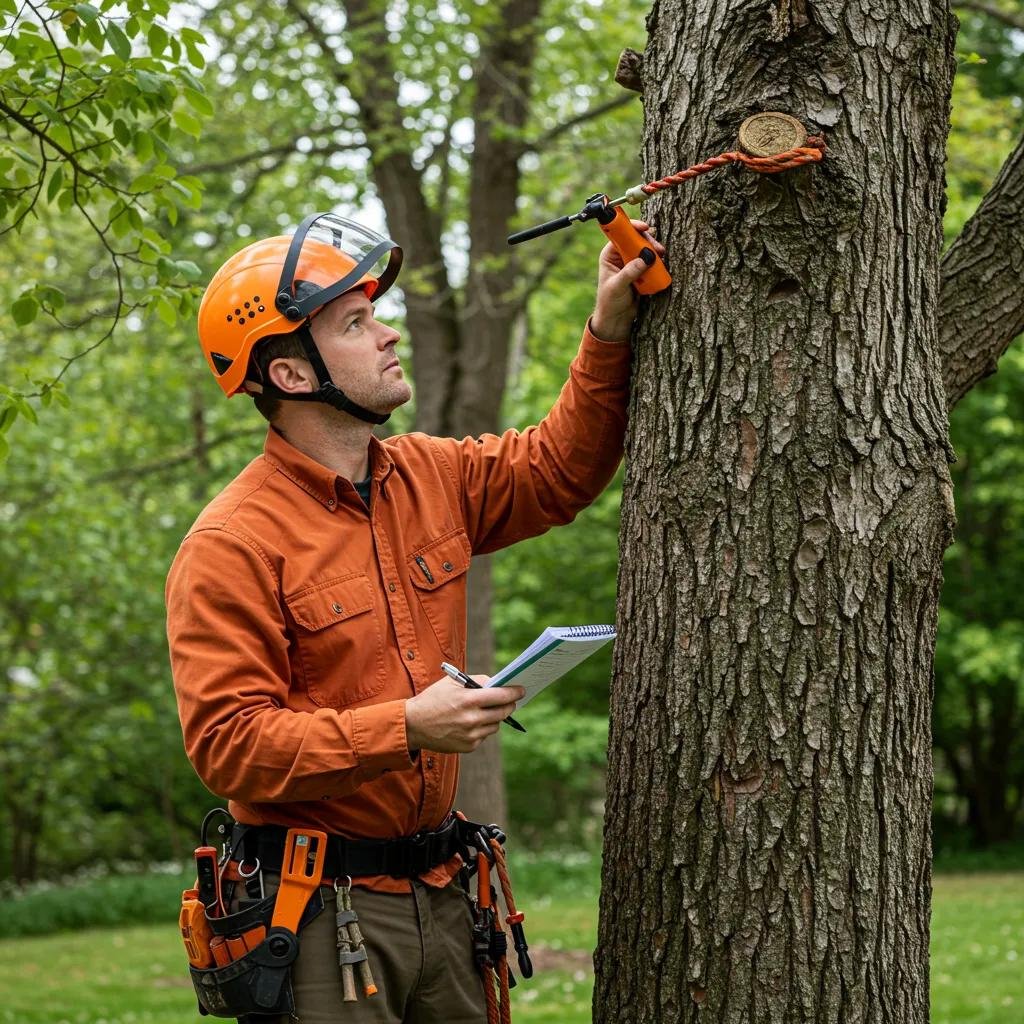
A comprehensive tree health assessment combines a visual and instrument-assisted inspection of crown, trunk, and root systems with soil testing and a formal risk evaluation to produce prioritized recommendations. The mechanism involves stepwise evaluation—site history, species identification, crown and trunk inspection, root crown assessment, and soil nutrient analysis—so that symptoms are tied to causes and practical treatments can be recommended. This structured approach yields clear benefits: accurate diagnosis, targeted interventions, and documentation that supports long-term management decisions. Below is a practical inspection checklist that certified arborists typically use during a professional assessment.
A standard inspection workflow includes:
- Site and species review to understand history and risk context.
- Visual crown and trunk inspection for decay, cankers, and structural defects.
- Root crown and soil evaluation to assess root health and compaction.
This checklist provides a concise roadmap for homeowner expectations and leads into a detailed component comparison table that helps clarify what each inspection task detects and why it matters.
| Inspection Component | Purpose | What It Detects |
|---|---|---|
| Root crown inspection | Examine root flare and soil-to-trunk interface | Root rot, girdling roots, soil compaction |
| Crown evaluation | Visual and measured canopy assessment | Structural defects, dieback, canopy imbalance |
| Soil nutrient test | Laboratory analysis of root zone chemistry | N-P-K levels, pH, micronutrient deficiencies |
This table clarifies how each assessment area contributes to diagnosis and treatment planning. The next subsection explains how certified arborists carry out these inspections in Orlando’s conditions.
How Do Certified Arborists Conduct Tree Inspections in Orlando?
Certified arborists begin inspections by collecting site history and species data, which frames diagnostic expectations and informs tailored recommendations. They perform a stepwise visual inspection of the trunk and crown, looking for fungal fruiting bodies, cracks, included bark, and abnormal leaf patterns, then deploy tools like soil probes and may use sounding or resistograph tests if decay is suspected. Arborists document findings, rate risk, and produce a report that prioritizes actions—pruning, soil amendment, cabling, or removal—so homeowners understand cost and safety implications. This professional workflow enables precise interventions that address the root cause rather than symptoms alone.
This tool-assisted approach supports accurate symptom interpretation, which is essential when identifying disease signs and pest infestations described next.
What Signs Indicate Tree Diseases or Pest Infestations?
Visible signs of disease and pests include discolored or prematurely dropping leaves, dieback in branch tips, fungal conks or cankers on trunks, and boreholes or sawdust-like frass indicating wood-boring insects. These observable symptoms point to possible root rot, vascular disease, or insect attack, and early recognition allows for containment measures such as sanitation pruning or targeted treatment. Homeowners should photograph symptoms and limit pruning until a professional diagnosis is made when uncertain, because improper cuts or treatments can worsen issues. Prompt documentation and consultation reduce risk of misdiagnosis and improve treatment outcomes.
Recognizing these symptoms feeds directly into how risk assessments quantify hazard potential and recommend mitigation, which is covered in the following subsection.
How Is Risk Assessment Performed to Prevent Tree Hazards?
Risk assessment combines defect identification with target analysis—what is beneath or around the tree—and a qualitative or quantitative likelihood vs consequence framework to produce a risk rating. Arborists evaluate defect severity, species failure tendencies, and occupant exposure to estimate potential consequences and then recommend measures such as pruning, cabling, or removal to lower risk to acceptable levels. This risk-based decision-making balances tree preservation with safety, using mitigation strategies proportionate to the hazard. Clear documentation of risk ratings and recommended actions helps homeowners prioritize interventions and budget for necessary work.
Understanding risk assessment informs when to escalate to disease management strategies, which is the focus of the next H2 section.
For professional implementation of assessments, Volusia Bobcat & Tree Service (also Tree Service Near Me LLC) offers an Arborist Service that provides detailed tree inspections to identify hazards, diseases, pests, and structural issues. Homeowners seeking a formal arborist checkup can schedule an inspection to receive a written report and recommended action plan; contacting the company by phone connects you to certified personnel who can advise on next steps.
How Does Florida Tree Disease and Pest Management Protect Your Trees?
Florida tree disease and pest management applies targeted identification, monitoring, cultural practices, and selective treatments to interrupt disease cycles and suppress pest populations before irreversible damage occurs. The mechanism rests on early detection and integrated responses—sanitation, host resistance, biological controls, and, when necessary, targeted chemical treatments—minimizing non-target impacts while restoring tree health. This integrated approach improves survival rates for affected trees and reduces spread to neighboring specimens. Below is a direct reference table pairing common Florida diseases/pests with typical symptoms and recommended homeowner actions to use as a quick guide.
Common Florida diseases and recommended homeowner responses:
| Disease/Pest | Symptom/Sign | Recommended Action |
|---|---|---|
| Laurel Wilt | Rapid wilting, brown inner bark | Isolate affected tree and consult arborist for removal options |
| Oak Wilt | Leaf chlorosis, rapid branch dieback | Contact arborist immediately; avoid pruning during active spread |
| Root Rot | Progressive canopy decline, poor root plate | Perform soil drainage and professional root and soil diagnostics |
| Ambrosia Beetle | Small boreholes, sawdust at base | Sanitation and monitoring; professional insecticidal treatment if confirmed |
This table provides a quick-action reference for homeowners and leads into practical identification tips for common Central Florida pests.
What Are the Most Common Florida Tree Diseases and Their Symptoms?
Common Florida tree diseases include laurel wilt, oak wilt, and various root rots; each presents distinctive symptoms such as rapid wilting, canopy discoloration, or progressive dieback. Laurel wilt often causes sudden wilting and woody tissue browning, indicating urgent containment measures, while oak wilt can display leaf discoloration followed by rapid branch loss. Root rot typically manifests as gradual canopy thinning accompanied by poor root anchorage or soil saturation. Early symptom recognition prompts timely interventions that can save nearby trees and reduce landscape-level impact.
Rapid detection and correct identification inform appropriate homeowner or professional responses, which is explained next as pest identification and control thresholds.
How Can Homeowners Identify and Control Tree Pests in Central Florida?
Homeowners can identify pests by looking for visual cues: boreholes and frass for wood borers, sticky honeydew and sooty mold for sap-feeders like aphids or scales, and defoliation patterns for caterpillars. Basic controls include sanitation—removing and destroying infested material—improving tree vigor through watering and fertilization, and using targeted trunk or soil treatments when professional thresholds are met. Photo-documenting pests and consulting a certified arborist helps confirm species and choose effective treatment while minimizing unnecessary chemical use. Threshold-based decisions protect beneficial organisms and reserve professional treatments for confirmed outbreaks.
These homeowner actions align with the principles of Integrated Pest Management, described in the following subsection.
What Is Integrated Pest Management and How Does It Work?
Integrated Pest Management (IPM) is a decision-based framework that emphasizes monitoring, cultural controls, biological solutions, and targeted interventions only when thresholds are exceeded. IPM starts with regular inspections and uses cultural tactics—proper pruning, sanitation, and enhancing tree vigor—to reduce susceptibility, then employs biological controls and precise treatments as needed. The goal is to manage pest populations below damaging levels while minimizing environmental impact and chemical reliance. Implementing IPM for trees improves long-term pest suppression and pairs well with routine preventative maintenance.
Practical IPM steps—monitoring, sanitation, biological controls, and targeted chemical use—help homeowners limit pest impacts and transition naturally into pruning strategies that further strengthen tree resilience.
Why Is Proactive Tree Pruning and Trimming Vital for Tree Health?
Proactive pruning and trimming shape tree structure, remove hazardous or diseased wood, and balance canopy weight to reduce failure risk while encouraging healthy growth patterns. The mechanism lies in selective removal of weak attachments and deadwood, which redirects growth energy and reduces decay pathways; this contributes to safety and improved physiological function. When performed on a planned schedule, pruning prevents large-scale structural failures and reduces the need for emergency interventions. The next subsections explain structural pruning goals, timing for deadwood removal and thinning, and how routine trimming lowers long-term costs.
A consistent pruning regimen underpins structural integrity and prepares trees to better resist pests, diseases, and storm forces.
How Does Structural Pruning Improve Tree Safety and Growth?
Structural pruning establishes a strong scaffold by removing competing leaders, thinning crowded branches, and correcting included bark or narrow crotches that predispose trees to failure. The mechanism is to foster wide branch angles and balanced growth allocation so that future loads are more evenly distributed and failure-prone attachments are minimized. Proper cuts stimulate compartmentalization rather than creating large open wounds that invite decay. Over time, trees pruned structurally develop improved wind resistance and healthier canopy architecture, reducing both risk and maintenance needs.
These structural benefits make pruning a preventive investment, which must be scheduled with seasonal and species-specific timing discussed next.
When Should Deadwood Removal and Canopy Thinning Be Performed?
Deadwood removal and moderate canopy thinning should be timed to minimize stress and disease spread—generally performed during dry periods and outside peak growth flushes for many species in Central Florida. Removing dead branches reduces failure potential and eliminates pathogen reservoirs, while cautious thinning improves light penetration and air flow without causing excessive defoliation stress. For Florida palms and certain hardwoods, species-specific windows apply, and a certified arborist can recommend exact timing. Planned thinning reduces storm vulnerability and permits healthier regrowth, supporting longer-term tree vitality.
Knowing when to thin or remove deadwood connects to how trimming prevents costly damage, the topic of the next subsection.
How Does Regular Trimming Prevent Costly Tree Damage?
Regular trimming lowers long-term costs by preventing catastrophic failures that often require emergency removal, limb removal from structures, or expensive property repairs. Scheduled maintenance addresses issues when they are small and manageable, and the cumulative cost of periodic pruning is typically far less than emergency response and structural repair after a failure. In addition, well-maintained trees are less attractive to many pests and resist disease spread, reducing treatment expenses. Homeowners who budget for routine trimming protect both their landscape investment and personal safety, making preventative maintenance economically prudent.
Given the safety and economic benefits of pruning, combining trimming with deep root nutrient management further improves tree resilience, as discussed next.
For homeowners seeking professional trimming, Volusia Bobcat & Tree Service (also Tree Service Near Me LLC) provides a Professional Tree Trimming service focused on shaping and pruning trees, removing hazardous branches, and encouraging healthy growth; contact the company by phone to discuss structural pruning plans or to schedule canopy management work.
What Are the Benefits of Deep Root Fertilization for Tree Vitality?
Deep root fertilization places nutrients directly into the active root zone so trees in compacted or nutrient-poor urban soils rapidly access essential elements that support canopy density and stress resistance. The mechanism is targeted injection or soil probe placement of slow-release formulas near feeder roots, which improves uptake efficiency compared with surface-applied fertilizers. Benefits include enhanced foliage growth, improved recovery from stress, and stronger root development that supports long-term stability. The table below compares common nutrient targets and the outcomes homeowners can expect from corrective deep root applications.
Deep root fertilization nutrient outcomes:
| Nutrient/Attribute | Role in Tree Health | Benefit/Outcome |
|---|---|---|
| Nitrogen (N) | Promotes leafy growth and chlorophyll production | Increased canopy density and vigorous new shoots |
| Phosphorus (P) | Supports root development and energy transfer | Improved root establishment and recovery after stress |
| Potassium (K) | Regulates water use and disease resistance | Enhanced stress tolerance and overall tree vigor |
This comparison highlights why targeted nutrient delivery is often more effective than broad surface applications, and the following H3 subsections explain how fertilization works and when to apply it in Florida.
How Does Deep Root Fertilization Enhance Nutrient Uptake?
Deep root fertilization enhances uptake by delivering nutrients into the soil profile where feeder roots are active, avoiding surface fixation and nutrient losses common in sandy Florida soils. Slow-release or controlled formulations maintain steady availability, stimulating root growth and improving nutrient absorption over months rather than days. This method contrasts with surface applications that can volatilize or leach away, particularly in high-rainfall periods. Improved root health translates to fuller canopies, better drought resilience, and a stronger foundation for long-term vitality.
Enhanced uptake from deep root methods supports timing decisions for treatment windows in Florida’s climate, discussed next.
When Is the Best Time for Fertilization in Florida’s Climate?
In Central Florida, optimal deep root fertilization usually coincides with growth flushes and moderate rainfall periods—often applied in early spring and late summer to align with active root and canopy growth cycles. Timing may differ slightly for palms versus hardwoods, and soil testing prior to application ensures nutrient prescriptions match deficiency profiles rather than applying blanket formulas. Avoiding immediate pre-storm windows reduces nutrient runoff and improves effectiveness. Consulting a certified arborist and performing a soil test ensures applications are both timely and targeted.
Seasonal timing combined with diagnostic soil data ensures fertilization corrects specific deficiencies, the mechanics of which are explained below.
How Does Fertilization Correct Soil Nutrient Deficiencies?
Fertilization corrects deficiencies by supplying limiting nutrients—such as nitrogen for chlorosis, phosphorus for poor root development, or micronutrients like iron and manganese for specific discoloration symptoms—based on soil test results and tissue analysis when available. Corrective applications restore biochemical balance, enabling trees to resume normal growth rates and defense mechanisms. Monitoring results after application confirms response and guides any follow-up treatments. Professional analysis and targeted deep root applications prevent over-application and ensure physiologic recovery rather than symptomatic masking.
With fertilization and pruning in place, homeowners should also prepare trees for storm seasons; the next section outlines storm preparedness steps.
How Can Storm Preparedness Tree Care Protect Your Property?
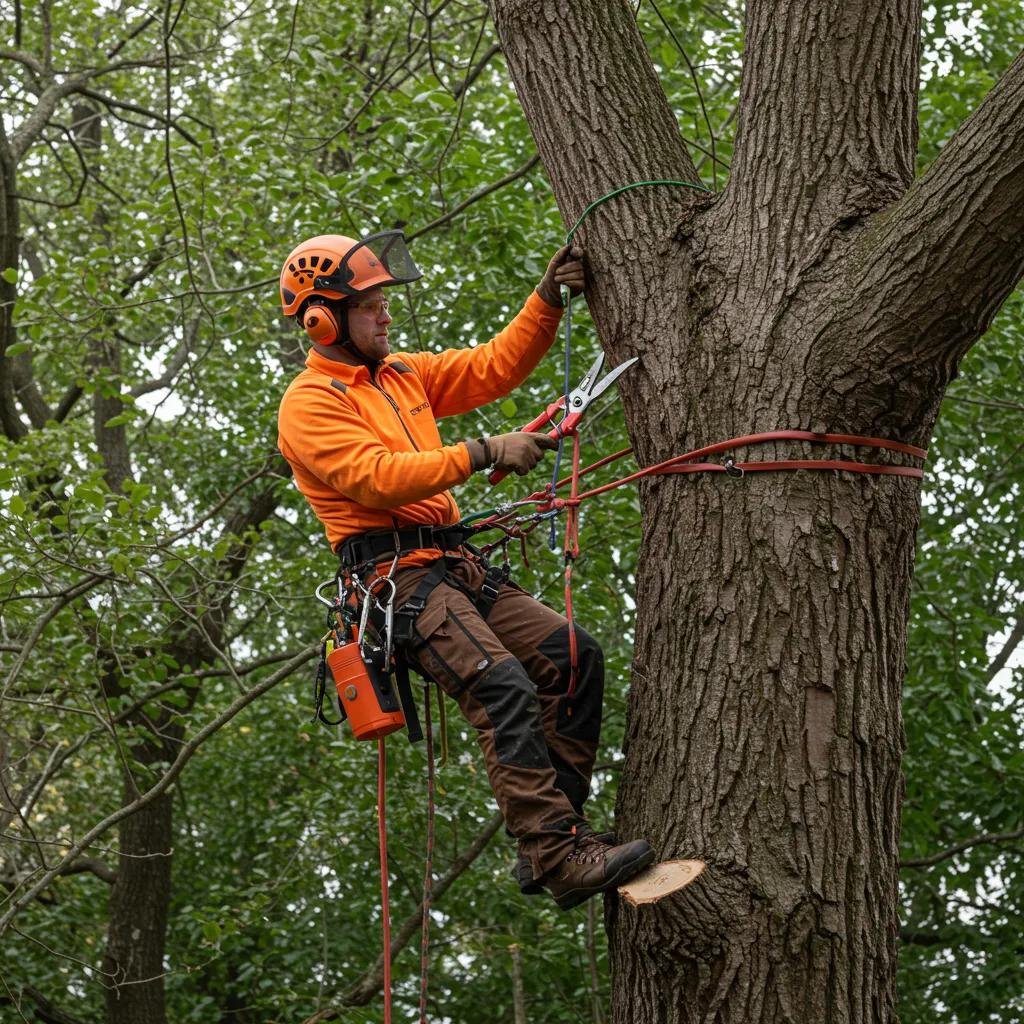
Storm preparedness tree care identifies pre-existing vulnerabilities and applies mitigation measures—such as targeted pruning, cabling, bracing, and root zone improvements—to reduce the chance of storm-related tree failure and property damage. The mechanism involves assessing structural defects, removing hazardous limbs, and, where appropriate, installing supports to redistribute mechanical loads. These interventions lower the probability of catastrophic failure during high winds and, when paired with emergency planning, reduce recovery time after storms. The next subsection provides a practical pre-storm inspection checklist homeowners can use to prioritize professional actions.
A pre-storm assessment helps homeowners decide which trees require immediate attention and which can be scheduled for routine maintenance.
What Pre-Storm Inspections Are Recommended for Orlando Trees?
Pre-storm inspections should focus on root stability, canopy balance, presence of deadwood, and signs of structural decay; checking soil saturation and previous root disturbances is also essential. Inspectors evaluate leaning trees, split trunks, and weak attachments that could fail under wind loading, and they prioritize removal or reinforcement of high-risk items near structures. Removing hazardous deadwood and correcting asymmetrical canopies reduces wind sail and decreases failure likelihood. Homeowners should document concerns and consult a certified arborist if any high-risk indicators appear during the checklist.
Performing these inspections sets the stage for mitigation options like cabling and bracing, which are explained next in terms of how they prevent storm damage.
How Do Cabling, Bracing, and Hazardous Limb Removal Prevent Storm Damage?
Cabling and bracing redistribute mechanical loads by supporting weak attachments or splitting trunks and can delay or prevent failure when removal is not desirable; hazardous limb removal eliminates imminent failure points that threaten people or property. Cabling is typically used for mature trees with valuable structure, while bracing addresses internal trunk splits; removal is chosen when defects are beyond repair. These methods improve safety but have limitations: they do not make a tree indestructible and require periodic inspection and maintenance. Understanding pros and cons helps homeowners weigh preservation against removal based on safety and long-term viability.
For immediate threats or post-storm hazards, swift emergency response is critical, described in the next subsection.
When Should Emergency Tree Removal Services Be Contacted?
Contact emergency tree removal services when a tree presents an immediate threat to life, structures, or utilities—examples include a severely leaning trunk, a split bole, or large limbs impaled into a home. Immediate homeowner steps include evacuating the danger zone, securing pets, and avoiding the area until professionals can assess and stabilize the situation. For reassurance, many service providers offer 24/7 emergency response to rapidly address imminent hazards and reduce secondary damage. If a tree poses immediate danger, contacting a certified emergency responder is the safest course of action.
Within cabling and bracing decisions and emergency contexts, homeowners value providers offering certified arborists and rapid response; Volusia Bobcat & Tree Service (also Tree Service Near Me LLC) advertises 24/7 Emergency Tree Removal and Certified Arborists to support urgent needs alongside preventative solutions such as Arborist Service and Professional Tree Trimming.
For homeowners preparing their properties, use the following pre-storm checklist to prioritize actions:
- Inspect for major deadwood, significant lean, or cracked trunks and mark items needing urgent attention.
- Clear gutters and remove nearby debris that could become projectiles in high winds.
- Schedule removal or reinforcement of high-risk trees located near structures well before storm season.
Using this checklist helps reduce emergency risk and informs scheduling for professional interventions.
When Should Orlando Homeowners Schedule Preventative Tree Care Consultations?
Homeowners should schedule preventative tree care consultations based on a combination of regular intervals and trigger events: routine inspections every 1–3 years for most trees, immediately after major storms, and whenever early symptoms appear. The mechanism of scheduled evaluations is that periodic monitoring catches gradual decline, while event-driven assessments respond to acute risk. Regular consultations balance cost and benefit by preventing escalation and allowing timely, lower-cost treatments. The following subsections offer a homeowner symptom checklist, frequency guidance for certified arborist assessments, and an explanation of the cost savings of preventative maintenance.
Establishing a predictable inspection cadence and knowing event triggers helps homeowners decide when to book professional services.
What Are the Early Signs of Tree Health Decline to Watch For?
Early signs of decline include thinning or sparse canopy, epicormic shoots (new shoots from previously inactive buds), unusual leaf discoloration or premature leaf drop, bark cracking, and localized fungal growths or conks. Spotting these early signs allows prompt diagnosis and treatment before decline becomes irreversible or spreads to adjacent trees. Homeowners should photograph changes and note timing to aid arborist diagnosis. Early intervention often restores vitality with targeted treatments, preventing larger, costlier interventions later.
These early signs inform recommended inspection frequency, addressed next.
How Often Should Certified Arborists Perform Tree Health Assessments?
Certified arborists generally recommend inspections every 1–3 years for typical urban trees, with higher-frequency reviews for younger trees establishing structure, trees near high-use areas, or trees recovering from disease or storm damage. Immediate assessments are warranted after major storms, construction near roots, or when visible decline signs appear. Factors that increase inspection frequency include species susceptibility, site stressors, and proximity to structures. Tailoring assessment frequency to tree condition yields optimal safety and value preservation.
Understanding recommended intervals clarifies how preventative care saves money compared to emergency responses, which is explained next.
How Does Regular Preventative Care Save Money Compared to Reactive Services?
Regular preventative care reduces cumulative costs by avoiding expensive emergency removals, property repairs, and large-scale disease outbreaks that require widespread treatments or tree replacement. Scheduled pruning and fertilization address problems when they are small and manageable, and documented maintenance often lowers liability and can reduce insurance claim exposure. Preventative investments preserve the value of mature trees, which are more costly to replace than to maintain. Homeowners who implement consistent maintenance realize better budget predictability and reduced long-term landscape expenditures.
Routine preventative programs therefore offer both safety and financial incentives, and the final section answers common homeowner questions to support decision-making.
What Are the Most Frequently Asked Questions About Preventative Tree Care?
This FAQ-style section addresses common homeowner concerns about signs of decline, trimming frequency, permits, and costs to provide quick, actionable answers for Orlando residents. The format is optimized for direct answers so readers can resolve urgent questions and decide when to consult a certified arborist. Each brief Q&A guides the reader toward next steps or professional consultation as needed.
What Are the Common Signs of an Unhealthy Tree in Florida?
Common signs include thinning canopy, premature leaf drop, discolored or spotted leaves, fungal conks on the trunk, root heave or exposed roots, and insect boreholes producing frass. Such symptoms may indicate nutrient deficiency, root disease, wood decay, or pest infestation and warrant prompt documentation. Homeowners observing these signs should limit pruning until diagnosis and contact a certified arborist for a professional assessment. Early detection and action significantly improve treatment success.
How Often Should Trees Be Trimmed in Orlando for Optimal Health?
Trimming frequency depends on species, age, and site conditions; a general rule is every 1–3 years for most established landscape trees, more frequently for young trees to establish structure and less often for slow-growing specimens. Safety-driven trimming—removing hazardous limbs—should occur as needed, and structural pruning is typically scheduled on a multi-year plan to minimize stress. A certified arborist can specify intervals based on species-specific growth patterns and local conditions to optimize health and reduce risk.
Do I Need a Permit to Remove a Tree in Orlando?
Permit requirements vary by municipality, species, and tree size; homeowners should consult local city or county ordinances to confirm if removal requires a permit. If a permit is required, a certified arborist can advise on documentation and mitigation measures to comply with regulations. When in doubt, contacting local authorities before removal prevents fines and ensures any protected species receive appropriate consideration.
How Much Does a Tree Health Assessment Cost in Orlando?
Assessment cost varies with tree size, number of trees, accessibility, and diagnostic tools required; key cost drivers include travel time, use of specialized equipment, and the depth of analysis (soil tests, lab diagnostics). If an exact price is not provided, request a written estimate or a detailed scope of work that outlines what the assessment includes. Many service providers offer a free initial phone consultation to discuss scope and scheduling before providing a formal quote.
What Is Deep Root Fertilization and How Does It Benefit My Trees?
Deep root fertilization is the placement of nutrients directly into the root zone through probes or injections to improve feeder root access and correct deficiencies; it supports canopy recovery, root growth, and stress tolerance. Benefits include increased foliage density, better drought resilience, and improved response to disease and pests when combined with other cultural controls. Homeowners should rely on soil testing to design a treatment plan and consult a certified arborist for proper application.
For homeowners ready to schedule preventative assessments or maintenance, Volusia Bobcat & Tree Service (also Tree Service Near Me LLC) offers both Arborist Service and Professional Tree Trimming to implement inspections, structural pruning, and targeted treatments. The company notes its Certified Arborists, Fully Licensed and Insured status, Price Match Guarantee, and availability for 24/7 Emergency Tree Removal; homeowners may request a free quote or schedule an assessment by calling the company phone number. This service-focused support helps translate the preventative strategies described in this guide into an actionable plan for your property.