Average Tree Removal Costs in Orlando: Complete Pricing Guide for Homeowners and Businesses
Removing a tree in Orlando requires understanding a mix of local factors, typical price ranges, and the services you may need to pay for. This guide explains average tree removal cost metrics for Orlando homeowners and businesses, showing a headline average and range, the main cost drivers, permit considerations, and how to compare quotes. Many property owners ask “what is the cost to remove a tree” and expect a clear number; this article gives a practical answer while mapping the choices that change cost-to-remove outcomes. You will learn how tree size, species, condition, and location influence pricing, which add-on services add fees, when a city permit matters, and how to vet contractors for safety and value. The sections that follow cover average costs and a quick cost table, how condition and access change pricing, common add-on fees (stump grinding, debris hauling, emergency work), permit rules and steps in Orlando, contractor selection criteria with vetted examples, species-specific cost guidance, and concise FAQs to use when collecting estimates.
What Is the Average Cost to Remove a Tree in Orlando?
Average tree removal cost in Orlando reflects labor, equipment, disposal, and local risk factors; homeowners should expect a typical mid-range figure and a wider low-to-high range depending on complexity. National and local data converge on a common headline: a typical Orlando removal averages roughly $1,100 with a common range near $400 to $1,800 for standard residential jobs, though outliers for extremely large or hazardous removals can be higher. This section breaks down size-based cost bands and the main drivers so you can quickly identify where your property falls on that spectrum, and it explains how to interpret a written quote. For a precise, property-specific estimate you can request a free on-site or virtual assessment from local providers, who will factor access, species, and disposal into a final price.
This table summarizes typical cost bands by tree size so homeowners can quickly scan where their tree likely fits.
| Tree Size Category | Typical Height / DBH | Typical Cost Range |
|---|---|---|
| Small tree removal | 10–25 ft / up to 6 in DBH | $400–$700 |
| Medium tree removal | 25–60 ft / 6–18 in DBH | $700–$1,200 |
| Large tree removal | 60+ ft / 18+ in DBH | $1,200–$1,800+ |
What Factors Influence Tree Removal Pricing in Orlando?
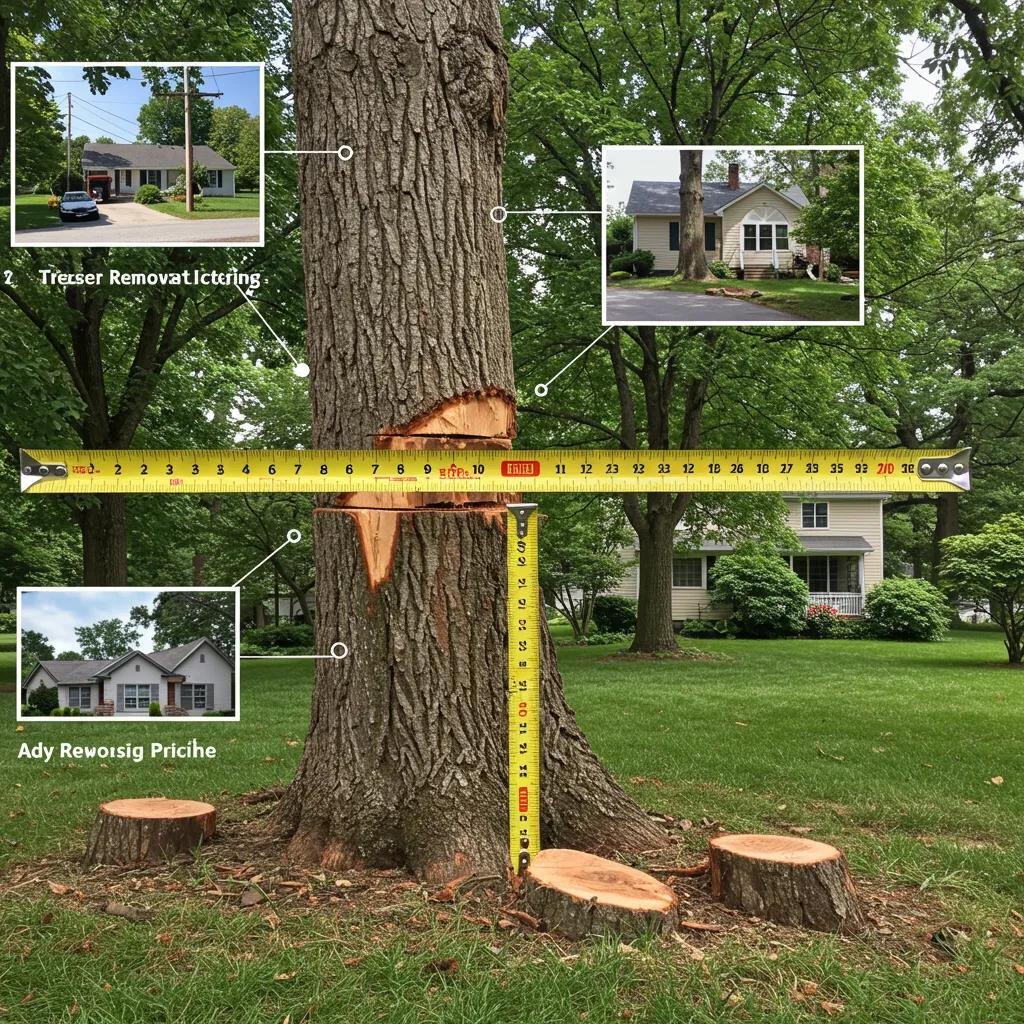
Cost to remove a tree depends on multiple interacting factors that increase labor, equipment, or liability. Key influences are height and trunk diameter, species and wood density, tree condition (healthy vs. diseased or structurally compromised), accessibility on the property, proximity to structures or utilities, and local permit or disposal requirements. Weather and seasonal storm risk in Central Florida can also influence scheduling and urgency, increasing costs when crews need to prioritize safety. Understanding these drivers helps homeowners anticipate higher estimates and ask targeted questions when comparing bids.
These cost drivers lead into more detailed discussion of how height and diameter change equipment choices and pricing for residential removals.
How Does Tree Size and Height Affect Removal Costs?
Tree size influences the crew size, rigging complexity, and equipment required, which directly raises the price to remove a tree. Taller trees typically need aerial lifts, sectional removal, or sometimes crane assistance when located near structures, and each tool and specialist hour increases cost. Diameter at breast height (DBH) affects both the removal labor and stump grinding pricing, since thicker trunks require more cutting time and heavier-duty grinders. Expect a step-change in pricing once a tree passes common tiers (around 25 ft, 60 ft) because of the shift from ladder work to lift or crane operations.
A clear understanding of equipment tiers lets homeowners evaluate whether a quoted crew and methods are appropriate for their tree’s size.
What Are Typical Price Ranges for Small, Medium, and Large Trees?
Typical price ranges align with the size bands shown earlier but vary by local conditions and job scope. Small trees (10–25 ft) are often the most affordable, falling near the low end of the $400–$700 band when access is straightforward and no stump work is required. Medium trees (25–60 ft) commonly fall in the $700–$1,200 range because they require more time and safety precautions. Large trees (60+ ft) can exceed $1,200 and climb well past $1,800 if special rigging, cranes, or traffic control are needed. Hazardous or emergency removals for any size can add surcharges.
Knowing these bands helps homeowners set realistic expectations and frame questions about the equipment and timeline included in each estimate.
How Does Tree Species Impact Removal Pricing?
Species affects removal price through trunk density, crown structure, root behavior, and typical size at maturity, which change cutting time and disposal complexity. Hardwoods like mature oaks have dense wood and large crowns that increase cutting and hauling time, while palms have unique removal methods—often faster per-trunk but potentially requiring different disposal handling for fronds. Pines can have brittle limbs and higher droplet risk during removal, raising safety time and precautions. Local pests and disease prevalence (for example, species affected by specific beetles) also add inspection or mitigation steps.
Appreciating species-specific challenges helps homeowners provide accurate information when requesting an estimate and anticipate species-driven cost adjustments.
How Do Tree Condition and Location Affect Orlando Tree Removal Costs?
Condition and location modify risk and method, and both commonly change labor and insurance exposure for crews, leading to higher or lower quotes. Diseased, dead, or structurally compromised trees increase hazard because branches or trunks can fail unpredictably, which requires additional rigging, more experienced climbers, and higher liability coverage; these needs generally raise the price. Similarly, the tree’s location—tight yards, fenced properties, and proximity to houses or power lines—requires sectional removal or crane work and slows progress, increasing cost. Site conditions that limit staging areas for equipment or disposal trucks also add mobilization complexity.
Understanding these impacts prepares homeowners to answer contractor questions and to identify when specialized crews or utility coordination will be needed for safe removal.
What Is the Cost Difference for Removing Hazardous or Diseased Trees?
Removing hazardous or diseased trees typically costs more due to immediate safety measures and complex rigging required to prevent property damage. Hazardous removals often need extra crew members, specialty rigging lines, or crane assistance to control falling sections; insurers and contractors charge premiums for this increased exposure. In many situations the cost multiplier ranges from a modest surcharge to a substantial increase depending on structural complexity and urgency. Prompt evaluation by a licensed arborist helps determine whether mitigation, bracing, or full removal is the safest and most cost-effective option.
Recognizing signs of hazard (cracks, root-heave, decay) before quoting reduces surprises and allows contractors to price appropriately for safety mitigation.
How Does Accessibility Influence Tree Removal Pricing?
Accessibility shapes the method crews choose and therefore the job price: wide, open yards allow conventional lifts and direct removal, while narrow or gated yards often require sectional rigging, rope lowering, or disassembly by hand. Each constrained operation increases labor time and risk, and some properties require permitting or neighbor notifications that extend project time. Homeowners can reduce costs by clearing staging areas, temporarily removing obstacles, and providing accurate access details to bidders. Clear access typically shortens the job and lowers the estimate.
Preparing property access in advance is a direct way to influence the final cost and reduce onsite delays.
Are There Additional Fees for Trees Near Power Lines or Structures?
Yes—trees within clearance distance of power lines or directly adjacent to structures often need coordination with utility companies and specialized crews trained in line-clearance removal, raising the job cost. This work requires extra insurance, specific safety equipment, and sometimes formal permit or utility notification, which adds to mobilization time. Responsibility for coordination and cost allocation varies: some utilities handle clearance for their lines, others require homeowner-paid contractor work. Prioritizing safety and verifying the contractor’s experience with utility coordination avoids liability and ensures compliant procedures.
If a tree contacts a line or threatens a structure, request a licensed crew with documented utility experience to reduce risk and delayed work.
What Are the Additional Costs Associated with Tree Removal in Orlando?

Add-on services and fees commonly account for a significant portion of the final invoice beyond basic felling and removal; homeowners should budget for stump work, debris hauling, disposal, and possible emergency surcharges. Stump grinding or full stump removal is typically quoted separately, as is chipping and hauling of limbs, and disposal fees can vary by volume and distance to transfer stations. Emergency tree services and expedited mobilization during storms or outages may include surcharges to prioritize safety. This section defines common add-ons, provides sample price models, and recommends questions to confirm inclusions in written estimates.
Below is an at-a-glance comparison of common add-on services and typical pricing structures to help homeowners spot what is included or charged separately.
| Add-On Service | Typical Pricing Model | Typical Price Range / Example |
|---|---|---|
| Stump grinding | Per-stump or per-inch DBH | $150 flat first stump or $2–$4 per inch |
| Debris chipping & hauling | Volume-based or flat fee | $75–$300 depending on volume and access |
| Full stump removal | Labor + excavation | $200–$600 per stump depending on roots |
| Emergency removal surcharge | Percentage or flat rush fee | 10%–50% surcharge depending on urgency |
Use this table to compare quotes and confirm whether cleanup, chip spreading, or hauling to disposal sites are included or billed separately.
How Much Does Stump Grinding or Removal Cost in Orlando?
Stump grinding usually follows a per-stump or per-diameter pricing model and is typically less expensive than full stump excavation. Common approaches are a flat starting fee for the first stump (often around the low hundreds) with added per-inch charges for diameter, or a simple per-stump flat rate for small stumps. Factors that increase cost include extensive root systems, close proximity to structures, rocky soil, or restricted access that requires manual removal or smaller grinders. Homeowners should weigh grinding versus full removal: grinding leaves ground-level mulch and roots in place but is faster and lower cost; full removal is more disruptive and pricier but eliminates roots and allows immediate replanting.
Ask contractors to explain their pricing model and provide sample calculations for the tree sizes on your property.
What Are Typical Debris Removal and Hauling Fees?
Debris removal often depends on the volume of wood and green waste, whether the crew chips and spread wood on site, and distance to disposal facilities. Providers commonly include a baseline cleanup in their removal bid but charge extra for large volumes, stacked logs left for homeowner use, or merchantable timber removal. Access limitations that require manual hauling or multiple load-outs also increase cost. To reduce debris fees, homeowners can request chipping on-site, arrange to keep usable firewood, or clear pathways in advance to speed removal.
Confirm whether the quote includes landfill/transfer station fees and whether the contractor will recycle or mulch material to offset disposal charges.
How Much Does Emergency Tree Removal Cost in Orlando?
Emergency tree removal includes expedited response, prioritized crew assignment, and often work outside standard hours—all of which add to price. Emergency situations include storm-damaged trees blocking access, trees contacting power lines, or trees creating immediate hazards to people or property. Surcharges vary by provider and scope: some contractors add a percentage rush fee, others impose a flat emergency mobilization charge plus hourly rates. Licensed, insured emergency crews are essential to ensure safety and coordinate with utilities when lines are involved.
If you face an urgent hazard, clearly describe the situation to obtain accurate emergency cost estimates and response-time commitments.
Do You Need a Permit for Tree Removal in Orlando? What Are the Costs and Requirements?
Permitting requirements in Orlando depend on tree size, species protection status, and whether removal is part of development or impacts public right-of-way; permits aim to protect valued canopy and manage replacement or mitigation. Generally, small residential removals may not require a permit, but protected species, heritage trees, or removals tied to construction typically do. This section outlines common triggers, application steps, and likely fees so homeowners can check compliance before hiring a crew. Understanding permit triggers upfront reduces the risk of fines and can affect project timing and costs.
The next subsections list permit triggers, step-by-step application guidance, and common fee examples to prepare homeowners for the local process.
When Is a Tree Removal Permit Required in Orlando?
A permit is usually required when the tree is a protected species, exceeds a regulated size threshold, is within a designated conservation area, or when removal is associated with development, subdivision, or public right-of-way work. Exceptions often exist for emergency removals that threaten immediate safety, but documentation may still be required after the fact. Removing a protected or regulated tree without a permit can result in penalties or mandatory mitigation. Homeowners should verify whether their tree falls under local protection criteria before proceeding.
Checking city planning resources or consulting a licensed arborist helps determine whether an application is needed for your specific removal.
How Do You Apply for a Tree Removal Permit in Orlando?
Applying typically involves submitting an application form, a site plan or sketch showing tree location, photos, and in some cases an arborist report that documents health or hazard status. Many municipalities offer online portals for permit submission and processing; processing times vary by complexity and volume of applications. Contractors often assist with permit paperwork as part of their service, which simplifies the homeowner’s role and ensures required documentation is complete. Allow processing time when scheduling removals to avoid delays.
Gathering accurate tree measurements, property diagrams, and clear photos speeds the application and helps contractors provide accurate permit-related estimates.
What Are the Typical Permit Fees and Regulations?
Permit fees depend on the city’s fee schedule, tree size, and whether mitigation or replacement planting is required; fees are often structured per tree or per project. Regulators may require replacement plantings, mitigation payments, or conservation easements for certain removals, especially for heritage trees. Because fee schedules and regulations change, always check current city resources or consult a licensed arborist who understands local code. Budgeting for potential mitigation or replacement reduces surprises after permit approval.
Confirm fee estimates with the local permitting office or your contractor before finalizing a contract to incorporate any mitigation obligations.
How to Choose the Right Orlando Tree Removal Service for Your Budget and Needs?
Choosing a contractor requires more than selecting the lowest bid; prioritize licensing, insurance, written scopes, safety protocols, and clear cleanup terms to protect property and limit liability. A good vetting process compares detailed written estimates, verifies insurance and licenses, checks recent references or images of prior work, and assesses whether the crew has appropriate equipment for the job size and access constraints. This section gives a practical checklist of criteria to compare quotes and explains why these items matter for both safety and cost. Use the checklist to solicit comparable bids that list the same scope of work and exclusions.
The following checklist converts vetting criteria into actionable items homeowners can request from prospective contractors.
- Verify Licensing and Insurance: Ask for proof of contractor licensing and general liability/workers’ compensation insurance.
- Request a Detailed Written Estimate: Ensure the quote lists scope, equipment, cleanup, disposal, and permit responsibilities.
- Check Equipment and Safety Procedures: Confirm the crew uses appropriate lifts, rigging, and fall protection for your tree size.
- Ask for References or Photos of Similar Jobs: Recent examples demonstrate experience with comparable complexity.
- Confirm Emergency Response and Scheduling Terms: Understand surge fees and typical mobilization timelines.
Why Hire a Licensed and Insured Arborist in Orlando?
Hiring licensed and insured arborists protects homeowners from liability for worker injuries and property damage and ensures adherence to accepted safety and pruning standards. Licensed professionals carry insurance that covers on-the-job accidents and property claims, while certifications indicate training in tree biology and proper removal techniques. Uninsured or unlicensed contractors may offer lower bids but transfer the financial risk to the homeowner in case of accident or damage. Verifying credentials and asking for copies of certificates before work begins is a best practice to guarantee safe, code-compliant outcomes.
Licensed arborists also provide informed recommendations on mitigation and can assist with permit documentation when required.
What Are the Benefits of Using Volusia Bobcat & Tree Service?
As an example of a provider that aligns with homeowner priorities, Volusia Bobcat & Tree Service operates under the brand Tree Service Near Me LLC for Orlando operations and emphasizes several practical protections for clients. Their stated value propositions include a Price Match Guarantee to compete on price fairness, a 100 percent Satisfaction Guaranteed policy for customer assurance, full licensing and insurance to manage liability, 24/7 Emergency Services for urgent hazards, free quotes/estimates to clarify cost up front, and experienced certified arborists to handle technical or permit-related needs. Evaluating providers that list these capabilities helps homeowners prioritize safety, transparency, and emergency responsiveness when selecting a contractor.
When comparing bids, use these UVPs as a template to ask whether a provider will match prices, guarantee satisfaction, provide emergency response, and deliver a free estimate.
How to Get a Free Tree Removal Estimate in Orlando?
A free estimate typically starts with basic property information and photos, followed by either a virtual assessment or an on-site visit for larger or complex trees; on-site estimates are more accurate for pricing decisions. When requesting a quote, provide clear photos showing the whole tree, nearby structures, driveway access, and any obstructions, plus an estimate of tree height if known. Virtual quotes are useful for initial budgeting, but confirm a written on-site estimate before signing. Ask the estimator to itemize stump grinding, debris hauling, permits, and any potential surcharges so you can compare quotes fairly.
Preparing the checklist below before contacting providers makes estimate comparison faster and reduces misunderstandings.
- Take photos of the whole tree and surrounding area.
- Measure or estimate tree height and trunk diameter if possible.
- Note access constraints (gates, fences, narrow driveways).
- List desired add-on services (stump grinding, chip spreading, hauling).
Using these items ensures contractors price consistently and makes final selections based on documented scopes.
What Are the Average Costs to Remove Common Orlando Tree Species?
Species-specific traits change time, equipment, and disposal needs, so cost estimates often vary by species even at identical sizes. This section provides cost guidance for three common Orlando species—oak, palm, and pine—explaining why each tends to be more or less expensive to remove and offering practical homeowner tips for preparation. Species differences stem from trunk hardness, crown density, combustible debris risk, and typical root complexity, all of which affect crew choices and disposal methods. Use species guidance to anticipate likely adjustments to the baseline size-based estimates previously shown.
The following table presents species-specific cost cues useful for homeowner budgeting and contractor discussions.
| Tree Species | Typical Height / Difficulty | Typical Removal Cost Range |
|---|---|---|
| Oak tree | Large crowns, dense hardwood; high labor | $900–$2,000+ |
| Palm tree | Single or multi-trunk; special frond disposal | $300–$1,000 |
| Pine tree | Tall, brittle limbs; seasonal risk factors | $500–$1,500 |
Compare these ranges against the size-based bands to refine expectations and to ask species-specific questions when collecting bids.
How Much Does It Cost to Remove an Oak Tree in Orlando?
Oaks tend to be expensive to remove because mature specimens have dense wood, wide crowns, and extensive root systems that complicate felling and hauling. Typical oak removals for medium to large trees commonly fall toward the upper range of standard large-tree pricing, often exceeding $1,000 when crowns and root access slow work. Removal considerations include sectional lowering to protect nearby structures, hauling heavy timber, and potential mitigation or replacement obligations for protected specimens. Homeowners should request a detailed on-site assessment and confirm whether the quote includes stump grinding or separate excavation.
Preparing yard access and clearing staging areas reduces labor time and may lower the final oak removal cost.
What Is the Price Range for Palm Tree Removal in Orlando?
Palm removals are often less expensive per-trunk than comparable hardwoods because palms have hollow trunks and simpler cutting requirements, but multi-trunk palms and frond disposal can add cost. Single-trunk palms with good access commonly sit near the lower end of removal bands, while clustering, date palms, or palms requiring specialized frond handling can be pricier. Palm stumps often require different grinding considerations, and some homeowners choose to leave certain palm bases for landscaping. Clarify whether the quote includes frond hauling and stump work to avoid surprise fees.
Ask the estimator to specify per-trunk pricing and any extra charges for multi-trunk or difficult access scenarios.
How Much Does Pine Tree Removal Cost in Orlando?
Pine trees can be tall with brittle limbs that break unpredictably, creating additional safety work and sometimes seasonal constraints related to pests or disease. Removal costs for pines vary by height and condition; healthy pines with straightforward access often fall in mid-range estimates, while storm-damaged or diseased pines that require emergency response or special rigging push costs higher. Consider timing: removing pines outside of high storm seasons can reduce scheduling premiums and emergency surcharges. Request that estimates account for branch management and chip haul-away in their cleanup scope.
Proper timing and clear communication about condition reduce unexpected emergency costs for pine removals.
Frequently Asked Questions About Tree Removal Costs in Orlando
How much it costs to cut down a tree depends on size, species, condition, access, and required add-on services; average residential removals commonly range from about $400 to $1,800 with a typical midpoint near $1,100. This answer summarizes the headline range and points to the main drivers—height/DBH, accessibility, species, and hazardous condition—then directs homeowners to collect detailed written quotes that list exclusions.
What factors should I consider when comparing tree removal quotes? Compare scope clarity, inclusions (stump grinding, debris removal), licensing and insurance status, timeline and mobilization terms, and emergency response availability. Use a simple checklist to ensure quotes are comparable and to identify lowball offers that omit critical safety or disposal elements.
Can I get emergency tree removal services 24/7 in Orlando? Many local providers advertise 24/7 emergency response for storm damage or hazardous situations, but emergency jobs usually include surcharges and may prioritize safety over immediate property cleanup. Confirm emergency availability, expected response time, and surge fees before emergency mobilization.
Are there ways to lower tree removal costs without sacrificing safety? Yes—preparing clear access, bundling multiple trees in one job, scheduling outside peak storm seasons, and accepting on-site chipping instead of hauling can reduce cost while preserving safety. Avoid DIY approaches for large or hazardous trees and always verify contractor insurance and methods.
For immediate assistance or to arrange a free estimate, search for Volusia Bobcat & Tree Service or Tree Service Near Me LLC (operating in Orlando) and request a no-obligation quote from a licensed, insured provider that offers free estimates, emergency services, and satisfaction guarantees. This step ensures a qualified team evaluates your unique site conditions and provides a transparent, safety-first price.