24/7 EMERGENCY SERVICES CALL (386) 800-2530

Common Tree Pruning Myths Debunked: Expert Guide to Proper Tree Trimming and Care in Orlando

Pruning myths circulate quickly, and homeowners often act on incomplete or outdated advice that can harm trees, reduce safety, and increase long-term costs. This guide explains common tree pruning myths, the arboricultural reasons they are incorrect, and specific, actionable practices that promote tree health, structural integrity, and landscape value in Orlando. By focusing on tree pruning myths debunked with science-backed reasons and local context, readers will learn when to prune, how to cut correctly, and when certified arborist help is the safest option. The article maps major misconceptions, details proper techniques such as preserving the branch collar and using crown thinning instead of topping, and offers species-specific timing for Live Oak, Sabal Palm, and other local trees. You will also find practical lists, EAV tables for quick myth-versus-truth reference, and a dedicated section describing how professional tree trimming services in Orlando can help homeowners avoid costly mistakes. Read on to learn precise pruning tips, seasonality for Orlando species, and how modern arboricultural practices and technology are changing tree care.

What Are the Most Common Tree Pruning Myths?

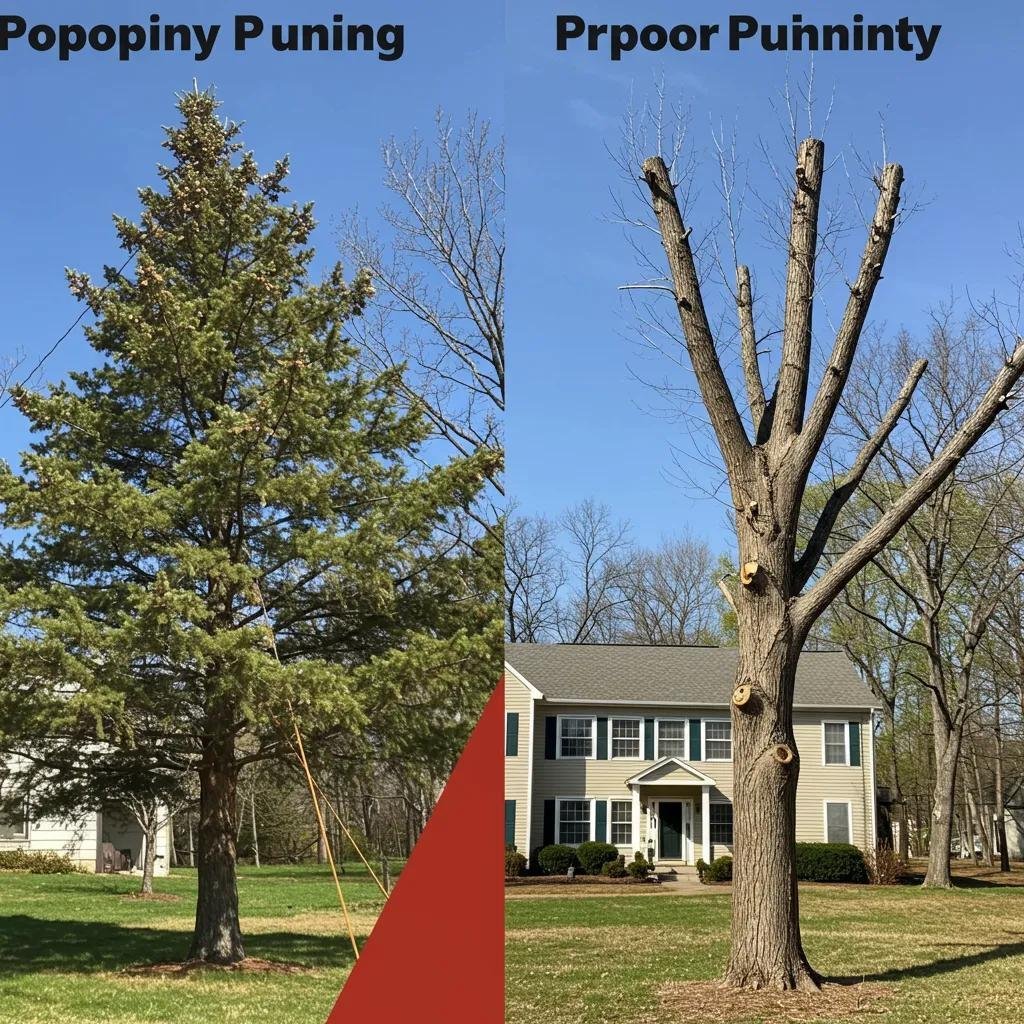
Contrasting images of improper tree topping and proper pruning techniques, illustrating common pruning myths

Pruning myths are concise, widespread beliefs about tree care that simplify complex biological responses into incorrect rules, and they persist because they appear to offer quick fixes. These misconceptions often arise from visible short-term results, anecdotal advice, or outdated techniques, and they overlook how trees compartmentalize wounds and allocate resources. Correcting these myths improves tree health, reduces pest and disease risks, and enhances safety and property value. Below is a concise list of top myths with one-sentence debunks to aid quick understanding before deeper sections unpack each issue.

Common pruning myths with very short debunks:

  1. Myth: Trees don’t need pruning. Pruning is essential to remove deadwood, reduce structural defects, and guide healthy growth.
  2. Myth: Topping is a safe way to reduce height. Topping severs large limbs and promotes weak, hazardous regrowth that increases decay.
  3. Myth: Pruning paint helps wounds heal. Paint can trap moisture and hide decay; trees naturally compartmentalize wounds without paint.
  4. Myth: You can prune any time of year. Timing affects disease risk and regrowth; species and local climate determine optimal windows.
  5. Myth: Flush cuts are best. Flush cuts remove the branch collar and slow healing, increasing decay and structural weakness.
  6. Myth: Young trees don’t need pruning. Early structural pruning establishes a strong framework and prevents costly corrective work later.

These short debunks set the stage for full explanations of why each myth is harmful and what correct practices provide, which the next sections will unpack in detail.

Intro to the quick-reference myth table and summary:

Below is a skimmable EAV table comparing each common myth to why it is wrong and the correct practice homeowners should follow. This table helps homeowners prioritize actions and recognize when a certified arborist assessment is warranted. The following sections expand on each myth, offering evidence-based guidance and Orlando-specific considerations.

MythWhy It’s WrongCorrect Practice / Benefit
Trees don’t need pruningNeglect allows structural defects, decay, and pest habitat to developRegular pruning removes hazards, improves airflow, and directs growth to healthy branches
Topping is acceptableTopping severs large limbs, causes decay, and triggers weak shootsUse crown reduction or selective thinning to reduce size while preserving structure
Pruning paint aids healingPaint can trap moisture and mask decay, interfering with natural compartmentalizationMake proper cuts and allow natural woundwood formation; monitor larger wounds professionally
Any time is fine to pruneTiming affects pest/disease transmission and regrowth vigorFollow species-specific seasons to reduce disease risk and support recovery
Flush cuts are bestFlush cuts remove the branch collar, slowing closure and promoting decayPreserve the branch collar and use the three-cut method for safer removals
Young trees can waitEarly problems become more costly as trees matureFormative pruning builds strong scaffold structure and reduces future corrective pruning

This table condenses core corrections and points homeowners toward safer, evidence-based pruning practices, which the next H2 sections will detail further.

Why Do Tree Pruning Myths Persist Among Homeowners?

Pruning myths persist because visible short-term changes often look like improvements and because DIY culture rewards quick, inexpensive fixes that do not consider tree biology. Homeowners see a dramatic reduction in canopy after topping or aggressive cuts and interpret that as a permanent solution, even though the tree’s physiological response produces weak regrowth. Additionally, uncertified providers may promote simplified methods to reduce time and costs, which reinforces misconceptions at the neighborhood level. Understanding these social and economic drivers helps homeowners recognize why expert evaluation and certified arborist guidance are valuable in avoiding long-term damage.

Which Misconceptions Most Affect Tree Health and Safety?

Certain misconceptions—especially topping, frequent flush cuts, and incorrect timing—lead to immediate safety hazards and long-term decline by creating weak attachment points and exposing wood to decay organisms. These practices increase limb failure risk during storms and escalate maintenance needs due to repeated corrective work. Misapplied pruning also elevates liability for homeowners because weakened structures can damage property or injure people. Identifying these high-impact misconceptions helps prioritize interventions and reduces both risk and cost in the long run.

How Can Certified Arborists Help Correct These Myths?

Certified arborists provide evidence-based assessments, apply ISA-recommended pruning standards, and tailor interventions to species, site conditions, and long-term objectives for the landscape. Their training emphasizes preserving natural defenses—such as the branch collar and proper wound management—while minimizing unnecessary cuts and preventing decay. By offering diagnostic insight and clear maintenance plans, certified arborists educate homeowners and reduce reliance on harmful shortcuts, which improves tree longevity and safety. The next section debunks specific myths with technical explanations and practical alternatives.

Myth 1: Trees Don’t Need Pruning – What Is the Truth?

Trees need periodic pruning because targeted removal of dead, diseased, or poorly attached branches reduces failure risk, improves light and air penetration, and helps shape a tree for resilient growth. Pruning works by removing competing or hazardous limbs so the tree allocates resources to healthy tissue and forms stronger scaffold structures. The result is improved structural integrity, reduced pest and disease pressure, and enhanced landscape aesthetics that support property value. Understanding the objectives and timing of pruning allows homeowners to make informed decisions and avoid the consequences of neglect.

Why Is Regular Pruning Essential for Tree Health and Growth?

Regular pruning removes deadwood and disease vectors, opens the canopy to light and airflow, and directs growth toward structurally sound branches, which helps trees compartmentalize potential infections. These physiological responses reduce pest habitat and limit moisture retention in dense canopies, lowering disease incidence in humid climates like Orlando. Pruning also helps maintain a dominant central leader where appropriate, improving wind resistance and long-term form. Recognizing these mechanisms shows why pruning is preventive maintenance rather than cosmetic work.

What Risks Arise from Ignoring Tree Pruning Needs?

Ignoring pruning increases the chance of limb failure, accelerates decay in suppressed branches, and raises the potential for pest infestation in neglected cavities. Over time, minor defects compound, resulting in larger corrective cuts that remove more wood and harm tree vigor. Property damage, higher emergency removal costs, and liability exposure from falling limbs are practical consequences for homeowners who delay proper maintenance. Early pruning interventions reduce these risks and are often more economical than large-scale corrections later.

How Does Professional Pruning Improve Property Value?

Professional pruning improves curb appeal by creating balanced canopies and removing unsightly deadwood, which increases perceived landscape quality and can support higher property valuations. Correct pruning reduces future maintenance and emergency costs, strengthening the long-term investment potential of trees on the property. Documented pruning plans and assessments from professionals also provide homeowners with records useful for insurance and resale conversations. These combined benefits demonstrate that pruning is both a health and an asset management practice.

After explaining why routine pruning matters and the advantages professional methods provide, homeowners seeking certified arborist care can consider Professional Tree Trimming in Orlando for expert pruning that adheres to industry best practices and local species needs. This service connects property owners with trained technicians who apply correct cuts and structural pruning tailored to each tree.

Myth 2: Topping Trees Is a Good Pruning Technique – What Are the Dangers?

Topping is harmful because it removes large proportions of the canopy and severs primary limbs, disrupting the tree’s ability to compartmentalize wounds and maintain structural continuity. The physiological response to topping is rapid sucker growth and multiple weakly attached shoots that increase future failure risk and decay pathways. Proper alternatives maintain tree structure and health while achieving size or clearance goals without creating hazardous regrowth. The next subsections define topping, explain safe alternatives, and highlight arborist techniques for crown work.

What Is Tree Topping and Why Is It Harmful?

Tree topping involves cutting main branches back to stubs or lateral branches that are too small to assume structural loads, which causes excessive stress and decay in the remaining trunk. This practice removes a tree’s primary food-producing tissues, prompting a flush of weak, fast-growing shoots that have poor attachment to the remaining wood. Over time, decay pockets form in the oversized pruning wounds, compromising structural integrity and increasing the risk of sudden limb failure. Evidence-based pruning standards recommend avoiding topping in favor of targeted crown reduction techniques.

What Are Proper Alternatives to Topping for Crown Reduction?

  • Crown Reduction: Reduce branch length back to lateral branches that can safely assume the load, preserving the branch collar and canopy form.
  • Selective Thinning: Remove interior branches to decrease wind resistance and lighten the canopy without drastically reducing size.
  • Targeted Branch Removal: Remove specific limbs causing clearance or structural problems while maintaining overall architecture.

These alternatives maintain tree health and minimize the long-term need for corrective pruning, and they are selected based on species and structural assessment.

How Do Certified Arborists Perform Safe Crown Thinning?

Certified arborists begin with a structural assessment, marking targets for removal that reduce weight and wind sail while preserving live crown ratio and vigor. They use staging, proper rope and rigging techniques, and the three-cut method to avoid bark tearing and to protect the branch collar. Arborists also evaluate the tree’s capacity for change, recommending phased reductions over multiple seasons when necessary to avoid shock. This professional approach balances safety, tree biology, and aesthetic outcomes to prevent the harmful consequences of topping.

Myth 3: Pruning Paint Helps Tree Wounds Heal – What Does Science Say?

Pruning paint was historically used to seal wounds, but current research and arboricultural guidance show that most paints do not accelerate healing and may trap moisture, conceal decay, or inhibit natural compartmentalization. Trees isolate decay through compartmentalization of decay in trees (CODIT) processes that depend on cell-level reactions rather than surface coatings. Best practice emphasizes correct cut placement and monitoring rather than painting most wounds, reserving topical applications for specific pest or disease contexts under professional advice. The following subsections explain natural healing, paint drawbacks, and recommended wound care.

How Do Trees Naturally Heal After Pruning Cuts?

Trees do not “heal” in the same way animals do; instead, they compartmentalize damaged tissue by forming new wood and barriers that restrict decay. Correct pruning cuts preserve the branch collar and allow the tree to form woundwood at the cut perimeter, limiting pathogen entry and decay progression. The rate of compartmentalization depends on species, wound size, and environmental conditions, so smaller, well-placed cuts close faster. Understanding this mechanism clarifies why management focuses on cut technique rather than surface dressings.

Why Can Pruning Paint Be Detrimental to Tree Health?

Pruning paint can trap moisture against the wound surface, encouraging fungal fruiting bodies and hiding early signs of decay that require monitoring or intervention. Paint may also prevent beneficial desiccation of exposed tissues that limits certain decay organisms, and there is little peer-reviewed evidence that paint improves long-term outcomes for common pruning wounds. Many extension services and arboricultural authorities recommend against routine use of pruning paint and encourage correct pruning techniques instead. Homeowners should prioritize proper cuts and consult professionals for large wounds.

What Are Best Practices for Tree Wound Care?

Best practices include making proper cuts that preserve the branch collar, minimizing wound size by removing branches at appropriate junctions, and keeping surrounding areas sanitary to reduce pathogen spread. For large or structural wounds, professional assessment is advised to determine if corrective treatments, bracing, or targeted sanitation are necessary. Monitor wounds periodically for signs of decay or infestation and document changes for potential professional intervention. These steps focus on supporting the tree’s natural defenses rather than masking symptoms.

Myth 4: You Can Prune Trees Anytime of the Year – When Is the Best Time to Prune?

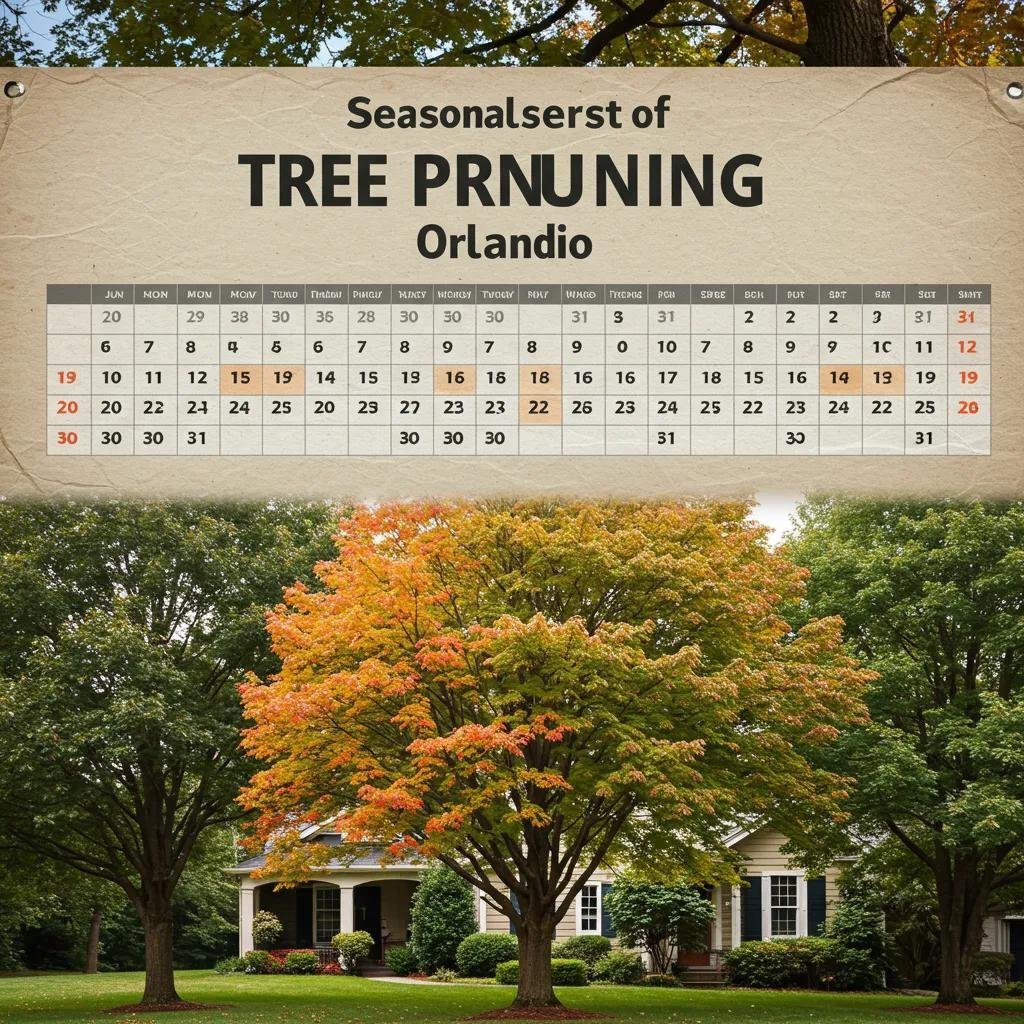
Seasonal calendar highlighting ideal tree pruning times for various species in Orlando

Pruning timing matters because seasonal cycles influence wound closure, pest pressure, and regrowth vigor; while some corrective pruning is best done year-round for safety, many routine pruning activities have optimal windows depending on species and local climate. In Orlando’s warm, humid subtropical conditions, species-specific timing reduces disease risk and promotes strong recovery by aligning cuts with dormant or less active growth phases. Below is a local pruning season table for common species, plus guidance on timing effects and emergency pruning triggers.

Intro to species timing table and summary:

The table below maps common Orlando species to recommended pruning seasons and notes on disease/pest timing to help homeowners plan maintenance that lowers infection risk while encouraging proper wound response. Use this as a seasonal reference to time routine pruning and to decide when to call professionals for sensitive work.

Tree SpeciesIdeal Pruning Season (Orlando)Notes on Disease/Pest Risk
Live OakLate winter to early springPrune to avoid heavy growth flushes; monitor for fungal pathogens
Sabal PalmLate spring to early summerRemove dead fronds carefully; timing reduces insect attraction
Southern MagnoliaLate winterPrune before spring flush to encourage flowering and reduce sap flow
PinesLate winterAvoid heavy pruning during wet months to limit fungal infection
Fruit Trees (Citrus)Late winter to early springLight formative pruning after cold risk has passed; monitor for pests

What Are the Ideal Pruning Seasons for Orlando Tree Species?

Ideal seasons align with lower pathogen activity and reduced sap flow for species common in Orlando, such as Live Oak and Sabal Palm, where late-winter pruning minimizes stress and risk of disease transmission. For flowering species, timing pruning to avoid removing buds preserves bloom display while maintaining health. Palm pruning follows different considerations—removal of dead fronds is needed for safety but should be done to avoid damage to the growing point. Recognizing these species-specific windows reduces unintended harm and supports long-term canopy health.

How Does Pruning Timing Affect Tree Health and Disease Prevention?

Pruning during high pest or pathogen activity can increase infection risk because wounds serve as entry points; conversely, pruning in quieter windows allows the tree to compartmentalize before stressors peak. Timing also affects regrowth vigor—cuts made before active growth produce more robust woundwood formation, whereas cuts during peak growth may trigger excessive sprouting. Therefore, aligning pruning with seasonal biology and local pest cycles reduces disease incidence and improves recovery outcomes.

When Should Emergency Tree Pruning Be Performed?

Emergency pruning is driven by immediate safety concerns—hanging limbs, storm-damaged crowns, or structural failure—and should be performed as soon as conditions are safe for workers and property. Homeowner priorities are safety and stabilization: keep people and pets clear, document damage for insurance, and contact professionals for hazardous removals. Temporary measures such as bracing or supporting limbs are not substitutes for certified arborist evaluation in severe cases. Safety-focused emergency responses necessitate prompt professional assessment and action.

Myth 5: Flush Cuts Are the Best Way to Prune Branches – What Is the Proper Technique?

Flush cuts remove the branch collar, disrupting the tree’s compartmentalization and slowing woundwood formation, which increases decay risk and weakens attachment points. Proper technique preserves the branch collar and uses the three-cut method for larger limbs to prevent bark tearing and encourage faster closure. Teaching homeowners the anatomy of the branch collar and demonstrating cut placement prevents common mistakes and supports healthier recovery. The following subsections define branch collar importance, proper cuts, and the damage flush cuts cause.

What Is a Branch Collar and Why Is It Important?

The branch collar is a zone of specialized tissue at the junction of branch and trunk that contributes to forming protective barriers and woundwood after removal. Preserving this collar by making a cut just outside it allows the tree to generate closure wood that restricts decay internally. Damaging or removing the collar through flush cutting eliminates this natural defense and creates a persistent wound prone to decay. Understanding this anatomy is fundamental to correct pruning and improved long-term tree resilience.

How Do Proper Pruning Cuts Promote Faster Healing?

Correct cuts are made just beyond the branch collar at a slight angle to shed water, preserving bark and cambial tissue needed for woundwood formation. The three-cut method for large limbs—an undercut, a removal cut, and a final clean cut—prevents bark tearing and reduces the wound area, facilitating more efficient compartmentalization. Smaller wounds close faster and are less likely to harbor pests or pathogens, which is why proper technique reduces both immediate and chronic vulnerabilities. Homeowners should practice these methods on small branches and leave larger removals to professionals.

What Damage Can Flush Cuts Cause to Trees?

Flush cuts remove the protective tissues of the collar and often expose the trunk to invasive fungi and insects, resulting in internal decay that may not be visible until structural failure occurs. Over time, trees subject to repeated flush cuts develop larger deadwood areas and require more extensive corrective actions, which can be costly and reduce lifespan. Additionally, the aesthetic and ecological value of the tree diminishes as structural integrity and canopy form degrade. Avoiding flush cuts preserves tree health and reduces long-term maintenance needs.

Myth 6: Young Trees Don’t Need Pruning – Why Is Early Structural Pruning Important?

Early structural pruning shapes a young tree’s form to develop a single leader, proper branch spacing, and strong scaffold branches, preventing the need for significant corrective pruning later. Formative pruning establishes good attachment angles and reduces the probability of future co-dominant stems that split under storm stress. The long-term benefits include lower maintenance costs, improved storm resilience, and a more attractive canopy that contributes to property value. The next subsections explain formative techniques, benefits, and when to involve certified arborists for young-tree care.

How Does Pruning Shape Healthy Tree Structure?

Formative pruning selectively removes competing leaders, crossing branches, and narrow crotches to promote a central leader and well-spaced scaffold branches, resulting in a balanced canopy capable of withstanding wind and load. Techniques include shortening overly vigorous shoots, removing downward-growing branches, and maintaining a healthy live crown ratio relative to trunk diameter. These early interventions guide growth trajectories and reduce the need for aggressive corrective cuts as the tree matures. Proper structural development reduces future risk and maintenance expense.

What Are the Long-Term Benefits of Early Pruning?

Early pruning yields several long-term advantages: fewer structural failures, reduced corrective pruning costs, improved canopy symmetry that enhances aesthetic and ecological functions, and better clearance for utilities and structures. Well-structured trees also support wildlife and urban canopy goals by maintaining healthier foliage and lower disease susceptibility. Investing in formative pruning is a preventative strategy that saves money and preserves landscape assets over decades.

When Should Homeowners Call a Certified Arborist for Young Trees?

Homeowners should call a certified arborist when they observe signs of disease, major structural defects, or when pruning needs exceed safe ladder height or technical ability, such as correcting co-dominant leaders in large young trees. A professional assessment provides a pruning plan tailored to species and site conditions and can identify subtle problems that non-experts miss. For new plantings and formative pruning, consulting a certified arborist ensures the right cuts are made at the right time, promoting long-term success and reducing future liability.

How Can Professional Tree Pruning Services in Orlando Help You Avoid These Myths?

Professional tree pruning services bridge the gap between homeowner intent and arboricultural best practices by providing diagnostics, tailored pruning plans, and execution that follows industry standards to protect tree health and property safety. Certified arborists use their training to choose appropriate techniques—such as crown reduction, selective thinning, and collar-preserving cuts—based on species, structural condition, and client objectives. When homeowners choose professional services, they gain access to safety-rated equipment, documented plans, and follow-up recommendations that prevent many of the common mistakes described earlier. The following subsections outline benefits, company guarantees, and steps to request a free quote or consultation.

What Are the Benefits of Hiring Certified Arborists for Tree Trimming?

Hiring certified arborists delivers expert assessment, correct and safe pruning techniques, and documentation of recommended treatments, which collectively protect tree health and homeowner interests. Arborists are trained to diagnose pests, diseases, and structural issues and to tailor interventions that maximize longevity while minimizing unnecessary wood removal. Safety is enhanced through professional rigging and equipment, reducing the risk to people and property during complex removals or crown work. These advantages make professional trimming an investment in both safety and long-term landscape value.

How Does Volusia Bobcat & Tree Service Guarantee Quality and Satisfaction?

Volusia Bobcat & Tree Service (operating as Orlando Tree Services) provides explicit service assurances designed to reduce homeowner uncertainty and support reliable outcomes. Their published commitments include a Price Match Guarantee, offering competitive pricing; a 100 percent Satisfaction Guaranteed policy to prioritize client experience; and the fact that they are Fully Licensed and Insured while employing Certified Arborists to perform work. These credentials aim to ensure safe, dependable, and professionally executed pruning that aligns with industry standards and homeowner expectations.

How Can You Get a Free Quote or Consultation for Tree Pruning?

To obtain a free quote or consultation, gather basic information such as clear photos of the tree(s), species if known, the nature of concerns (dead limbs, storm damage, clearance needs), and approximate property access details to help professionals prepare an accurate estimate. Contact the service provider through their advertised website or maps listing to request a consultation and submit the collected details; expect a follow-up that may include a site visit, diagnosis, and written proposal. Providing this information speeds up the assessment and helps produce a tailored plan that addresses both immediate safety and long-term tree care.

What Are the Frequently Asked Questions About Tree Pruning Myths?

This FAQ-style section provides concise answers to common homeowner questions using direct, actionable guidance useful for quick reference and structured-data optimization. Short answers emphasize when DIY is appropriate and when to contact professionals, and they include practical tips for basic pruning skills. The table after these answers summarizes the Q&A with guidance on when to call a professional, supporting decision-making and PAA-style responses.

What Are the 3 Basic Pruning Cuts Every Homeowner Should Know?

Homeowners should learn three basic cuts that cover most small pruning needs: the heading cut, the thinning cut, and the reduction cut. Heading cuts shorten a branch to stimulate lateral growth and are useful for shaping but can encourage dense regrowth if overused. Thinning cuts remove a branch at its point of origin to open the canopy and improve airflow without stimulating excessive new shoots. Reduction cuts shorten a branch back to a lateral that is at least one-third the diameter of the removed stem to maintain structure; these three cuts cover routine maintenance when applied judiciously.

  • Heading cut: Shortens branch to a bud or lateral to stimulate growth.
  • Thinning cut: Removes branch at its origin to open canopy and reduce weight.
  • Reduction cut: Shortens branch back to a strong lateral to maintain form.

These basic cuts empower homeowners to perform small tasks safely while recognizing when professional help is needed for larger removals.

Is It Safe to Prune Trees Every Year?

Annual pruning is safe for some fast-growing species or for routine maintenance like fruit trees and certain ornamentals, but frequency should be guided by species, growth rate, and pruning goals. Over-pruning—removing more than 25% of live crown in a year—can stress trees and reduce vigor, so conservative schedules are preferred for mature shade trees. Homeowners should follow species-specific guidance and consult certified arborists for large or structural pruning to avoid weakening trees. Pruning frequency is therefore a function of biology and objectives rather than a fixed annual rule.

Does Pruning Hurt or Help Tree Growth?

Pruning helps tree growth when cuts remove dead, diseased, or competing limbs, redirecting resources to healthy tissue and improving structure; however, excessive pruning removes too much photosynthetic capacity and can reduce vigor. Proper pruning balances removal with preservation of energy-producing foliage and encourages desirable growth patterns. When executed correctly, pruning reduces pest habitat and strengthens trees, whereas improper techniques or over-pruning increase susceptibility to decline. Understanding this balance informs effective maintenance choices.

Can Pruning Prevent Tree Diseases and Pests?

Pruning contributes to disease and pest prevention by improving airflow, reducing humidity within the canopy, and removing infected or infested limbs before problems spread. Timing and sanitation matter: pruning during high disease activity or using non-sterile tools can exacerbate pathogen spread. Pruning is one component of integrated pest and disease management and should be combined with monitoring and professional diagnosis for serious outbreaks. While helpful, pruning alone cannot replace comprehensive treatment when pathogens are established.

What Are the 4 D’s of Proper Pruning?

The 4 D’s—Dead, Diseased, Damaged, and Dangerous—provide a simple prioritization framework for homeowners assessing branches for removal. Dead branches should be removed to eliminate failure hazards; diseased limbs require removal and possible testing to prevent spread; damaged limbs from storms or mechanical injury may need immediate attention; and dangerous limbs posing imminent risk demand urgent professional action. Using this checklist helps homeowners decide what to prune and when to call a certified arborist for safe removal.

Intro to FAQ summary table and closing guidance:

QuestionShort Direct AnswerWhen to Call a Professional
What are the 3 basic pruning cuts?Heading, thinning, reductionCall a pro for cuts >2 inches or near structure
Is annual pruning safe?Depends on species and goalsCall a pro for mature shade trees or large removals
Does pruning help growth?Helps when done correctlyCall an arborist if unsure about structural cuts
Can pruning prevent disease?Yes as part of integrated managementCall for suspected widespread infection
What are the 4 D’s?Dead, Diseased, Damaged, DangerousCall immediately for dangerous limbs

What Local Factors Affect Tree Pruning Practices in Orlando, Florida?

Orlando’s climate, common species, and municipal urban forestry goals shape pruning priorities by influencing timing, pest pressures, and permit requirements for certain trees or public-right-of-way work. Local species like Live Oak and Sabal Palm have distinct pruning needs that differ from temperate-region norms, and city programs may encourage preservation of canopy through regulated practices. Understanding these local factors leads to better scheduling, compliance, and outcomes for property owners. The next subsections map species considerations, climate and program influences, and regulatory pointers.

Which Orlando Tree Species Require Special Pruning Considerations?

Live Oak requires careful pruning to avoid excessive flush cuts because its wound response and structural form benefit from selective thinning, while Sabal Palm pruning focuses on safe frond removal without damaging the bud. Southern Magnolias are sensitive to heavy cuts that remove flowering wood, so pruning windows and techniques must preserve buds. Pines and other resinous species have their own timing and decay risks, and citrus and fruit trees need more frequent formative pruning to maintain production and health. Species-specific knowledge ensures correct pruning strategies for each common Orlando tree.

How Do Local Climate and Urban Forestry Initiatives Influence Pruning?

Orlando’s warm, humid climate increases fungal disease pressure and compels timing adjustments to avoid peak pathogen seasons, favoring late-winter pruning for many deciduous and evergreen species. Urban forestry initiatives that promote canopy retention and storm resilience influence private pruning by encouraging preservation-first approaches and coordination with municipal programs. Homeowners should consider local recommendations and canopy goals when planning pruning to align personal property care with broader community objectives. These influences make local expertise valuable.

What Are Orlando’s Tree Pruning Regulations and Permits?

Local regulations may require permits for work on protected species, trees in public-right-of-way, or heritage specimens, and homeowners should verify municipal rules before major pruning or removals. Consulting city resources and extension guidance helps identify when official approval or coordination is necessary to remain in compliance. For potentially regulated work, professional arborists often assist with permit processes and documentation, smoothing navigation of local requirements. Understanding these rules prevents fines and supports responsible stewardship.

How Is Tree Pruning Evolving with New Technologies and Sustainable Practices?

Tree pruning increasingly benefits from technologies and sustainable approaches that improve assessment accuracy, reduce environmental impact, and enhance safety, with professionals integrating these tools into routine arboriculture. Drones, high-resolution imaging, GIS mapping, and AI-assisted analysis speed inspections and create precise work plans that minimize unnecessary cuts. Sustainable practices prioritize preservation-first planning, habitat retention, and minimal soil disturbance, aligning pruning with broader environmental goals. The next subsections explore arborists’ sustainability role, tech advances, and environmental responsibility in tree maintenance.

What Role Do Certified Arborists Play in Sustainable Tree Care?

Certified arborists apply conservation-focused pruning that preserves canopy function, prioritizes tree retention, and employs integrated pest management to reduce chemical dependence. Their training helps balance removal and preservation, aiming to maintain biodiversity and urban canopy services such as shade, stormwater mitigation, and carbon sequestration. Professionals also plan phased work to preserve long-term tree health while meeting safety and development objectives. This stewardship role positions arborists as essential partners in sustainable urban forestry.

How Are Drones and AI Improving Tree Pruning Accuracy?

Drones equipped with high-resolution cameras and lidar enable rapid canopy surveys and identification of hidden defects, while AI tools analyze imagery to prioritize work, estimate volumes, and generate precise quotes. These technologies increase safety by reducing the need for initial climbs, speed up assessments, and improve accuracy in planning crown reductions or removals. For homeowners, tech-enabled quotes often mean faster responses and more transparent recommendations, supporting informed decision-making. The next paragraph outlines environmental implications of these efficiencies.

Why Is Environmental Responsibility Important in Tree Maintenance?

Responsible pruning preserves the ecosystem services trees provide—shade, habitat, air purification, and carbon storage—while minimizing unnecessary removals that reduce urban canopy cover. Sustainable maintenance reduces chemical inputs, protects wildlife, and supports long-term canopy resilience in the face of development and climate variability. Homeowners can support these goals by choosing preservation-first pruning strategies, selecting appropriate species for planting, and consulting certified arborists who prioritize environmental outcomes. These practices sustain both individual landscapes and community ecological health.

Volusia Bobcat & Tree Service (operating as Orlando Tree Services) emphasizes professional, standards-based pruning and offers Professional Tree Trimming in Orlando to help homeowners apply these best practices; their service commitments include a Price Match Guarantee, 100 percent Satisfaction Guaranteed, being Fully Licensed and Insured, and employing Certified Arborists. For homeowners ready to schedule an assessment, prepare photos and basic tree information to request a free quote or consultation and receive a tailored plan that aligns with local species needs and sustainability goals.