24/7 EMERGENCY SERVICES CALL (386) 800-2530

Sustainable Practices in Tree Care: How to Maintain Healthy, Eco-Friendly Trees

Sustainable tree care combines arboricultural best practices with environmental stewardship to maintain tree health while minimizing ecological impact. This guide explains what sustainable tree maintenance means, why it matters for homeowners and urban landscapes in Florida, and practical methods you can use to support soil health, biodiversity, and long-term canopy resilience. Many property managers and residents face issues like storm damage, pest pressures, and water constraints; sustainable practices reduce those risks while improving carbon sequestration and shade value. The article maps core practices—pruning, organic pest management, green-waste recycling and mulching, native planting, preservation, and eco-conscious emergency response—and offers actionable steps and comparisons you can apply on residential or municipal properties. Throughout, referenced entities such as UF/IFAS Extension and the International Society of Arboriculture (ISA) inform recommended approaches, and targeted lists and tables make it simple to compare techniques and select the most environmentally friendly options.

What Are Sustainable Tree Maintenance Practices?

Sustainable tree maintenance means applying arboricultural methods that preserve tree physiology, conserve resources, and reduce waste while enhancing ecosystem services. This approach prioritizes species-appropriate care, minimal and selective interventions, soil stewardship, water-efficient practices, native planting, and green-waste recycling to maintain healthy urban forestry. Sustainable maintenance both extends tree longevity and mitigates negative impacts like invasive species spread and unnecessary removals. The following core practices summarize the primary actions that define eco-friendly tree care and their immediate benefits for property managers and homeowners.

Sustainable tree maintenance centers on these core practices:

  • Selective pruning and structural pruning to preserve form and reduce hazards without excessive removal.
  • Mulching and green-waste recycling to improve soil biology and retain moisture.
  • Integrated Pest Management (IPM) emphasizing monitoring, cultural controls, and targeted organic treatments.
  • Native tree selection and preservation to support biodiversity and climate resilience.
  • Soil health practices such as aeration, minimal compaction, and use of organic amendments.

These practices reduce long-term inputs and create resilient landscapes that require less water and chemical use, which naturally leads into understanding the specific environmental and tree-health benefits of sustainable care.

How Does Sustainable Tree Care Benefit Tree Health and the Environment?

Sustainable tree care benefits tree health by improving root function, nutrient cycling, and resistance to pests and disease through non-invasive practices that restore natural processes. Healthy soil biology, enhanced by organic mulches and reduced compaction, increases water infiltration and nutrient availability, which strengthens trees’ natural defenses and growth capacity. Environmentally, this care supports urban biodiversity, reduces stormwater runoff, and increases on-site carbon sequestration compared with removal and replacement cycles. Recent research and extension guidance emphasize these mechanisms as key to long-term urban canopy success in Florida landscapes.

These benefits illustrate why principles like species-appropriate planting and soil-first interventions are preferable, which leads into the guiding principles that define eco-friendly maintenance choices.

Which Core Principles Define Eco-Friendly Tree Maintenance?

Core principles of eco-friendly tree maintenance include minimal intervention, species-appropriate care, preserving mature trees when safe, and resource efficiency focused on soil and water conservation. Minimal intervention means targeted actions—removing only what compromises health or safety—rather than heavy-handed treatments like topping. Species-appropriate care considers native tolerance to drought, salt, and pests when making pruning and planting decisions. Resource efficiency prioritizes mulching and micro-irrigation over routine deep watering, reducing runoff and conserving municipal supplies.

Adopting these principles shifts decision-making from short-term fixes to long-term stewardship, which underscores the role of trained professionals in applying these concepts effectively.

What Role Do Certified Arborists Play in Sustainable Tree Care?

Certified arborists bring diagnostic skills, risk assessment capability, and knowledge of species-specific physiology essential to sustainable outcomes; their expertise helps avoid unnecessary removals and supports preservation. Arborists certified through recognized bodies follow standards for pruning, wound care, and safety that protect tree structure and public welfare. When to hire a certified arborist includes complex risk assessments, suspected root or trunk decay, or planning large-scale native plantings—tasks that exceed typical homeowner capacity. Asking an arborist about ISA recommendations, soil testing, and a preservation-first plan ensures interventions align with sustainability goals.

A professional evaluation often identifies preservation opportunities and informs pruning strategies that maintain canopy function while reducing long-term maintenance needs.

How Can Eco-Friendly Tree Pruning Improve Tree Longevity?

Eco-friendly pruning improves longevity by aligning cuts with tree biology to promote wound closure, structural balance, and healthy canopy architecture rather than creating stress or decay. Pruning goals focus on safety, health, and structure, and techniques like selective crown cleaning or structural pruning remove problematic wood while preserving photosynthetic capacity. Proper sanitation and tool choice reduce disease transmission, and timing decisions respect species phenology to avoid excessive stress. Understanding these elements clarifies why technique selection matters for long-term tree performance.

Pruning targets typically include:

  1. Safety: Remove defective branches that pose hazards while preserving as much live canopy as possible.
  2. Structure: Correct codominant stems and reduce leverage points through structural pruning.
  3. Health: Improve light penetration and airflow to reduce disease incidence and promote vigor.

These goals guide specific technique choice and connect to practical recommendations for timing and tools.

What Are the Best Techniques for Sustainable Tree Pruning?

Best sustainable pruning techniques include selective crown cleaning, crown thinning, crown raising, and structural pruning that remove only interfering or defective material while maintaining canopy function. Selective crown cleaning targets dead, diseased, or crossing branches to reduce pathogen reservoirs and failure risk. Crown thinning improves light and wind passage without removing the tree’s natural form. Structural pruning establishes a strong framework early in a tree’s life to reduce future corrective work.

TechniqueEcological ImpactPrimary BenefitTypical TimingEquipment
Selective crown cleaningLow removal of live tissueReduces disease and failure riskYear-round as neededHand saws, pruners
Crown thinningModerate canopy openingImproves airflow and lightDormant or early growthPole pruners, saws
Structural pruningPrevents future defectsLong-term reduced maintenanceYoung tree formative yearsLoppers, saws, trained arborist

This comparison helps select techniques that prioritize tree physiology and long-term canopy health, and next we consider when to schedule pruning for Florida species.

When Is the Optimal Time for Eco-Friendly Pruning?

Optimal pruning time depends on species, health status, and local climate; in Central and Southwest Florida, many trees can be pruned in late winter to early spring to minimize pest attraction and support wound closure. Dormant-season pruning reduces some opportunistic pest pressures, but some species benefit from light mid-season pruning to reduce sap flow or avoid bloom disruption. Emergency pruning is separate and prioritized for hazard removal regardless of season; routine maintenance should be scheduled to avoid stress during extreme heat or drought.

Timing choices balance tree physiology with pest cycles, which naturally leads to how pruning prevents disease and promotes growth.

How Does Proper Pruning Prevent Tree Disease and Promote Growth?

Proper pruning prevents disease by removing infected tissues, improving airflow to lower pathogen success, and creating cuts that encourage rapid compartmentalization, which reduces decay spread. By preserving root-to-shoot balance and avoiding large flush cuts, pruning maintains carbohydrate reserves necessary for repair and new growth. Improved light penetration and canopy structure enhance photosynthesis in remaining foliage, supporting vigor and reducing susceptibility to secondary pests.

Understanding these mechanisms informs tool selection and sanitation practices to limit cross-contamination during work.

What Tools and Equipment Support Eco-Friendly Pruning?

Eco-friendly pruning relies on appropriate, well-maintained tools—hand pruners, loppers, sanitized saws, pole pruners, and occasionally compact mechanical equipment operated with care—to make clean cuts that heal. Correct tool sizing reduces tearing and unnecessary tissue loss; sanitation between trees prevents pathogen spread and is essential when dealing with known diseases. Trained operators understand when manual techniques are preferable to mechanical topping or indiscriminate shearing to minimize collateral damage.

Proper equipment and operator training underpin effective implementations of the pruning strategies described above and reduce long-term maintenance needs.

What Are Effective Organic Tree Pest Control Methods?

Effective organic pest control emphasizes monitoring, cultural controls, biological agents, and targeted organic treatments that protect tree and soil health while minimizing non-target impacts. Integrated Pest Management (IPM) is the overarching framework: monitor populations, set treatment thresholds, use mechanical or cultural remedies first, deploy biological controls when appropriate, and reserve organic products for targeted interventions. This approach supports beneficial insects, bird populations, and soil organisms that naturally regulate pests, which is particularly important in urban and suburban Florida settings.

IPM follows a clear sequence:

  1. Monitor pest levels and identify species before action.
  2. Cultural controls like pruning and sanitation to reduce pressures.
  3. Biological controls such as beneficial insects to suppress populations.
  4. Targeted organic treatments if thresholds are exceeded.

These steps reduce chemical reliance and preserve urban biodiversity, leading into specific methods and treatments.

How Do Organic Pest Management Practices Protect Trees and Soil?

Organic IPM protects trees and soil by minimizing broad-spectrum pesticide use and prioritizing interventions that preserve beneficial organisms and soil structure. Practices such as pruning to remove infested tissue, improving tree vigor through mulching and proper irrigation, and planting resistant native species reduce pest pressure at the landscape scale. Biological controls introduce specific predators or parasitoids that target pests with minimal collateral damage, while monitoring ensures treatments occur only when necessary.

This conservation-focused method supports longer-term balance between pests and natural enemies and informs choices for natural treatment options.

Urban Forest Pest Management Strategies and Common Issues

Pest management on street trees in the U.S. aims to protect an asset worth nearly $30 billion plus an investment of over $425 million dollars per year, or $10.62 per managed tree. Tree care accounts for only .49% of city budgets, and spraying, a major pest control method, is only 4% of that. Only 36% of responding cities monitor for pests. The most common method is resident complaints (26%), followed by amount of tree damaged (23%) and number of trees damaged (22%). Results are provided by region, but nationally the most often reported insects in 1986 were aphids, gypsy moth, elm leaf beetle, borers and tent caterpillars, while the diseases were Dutch elm disease, anthracnose, Verticillium, maple decline and oak wilt. The most commonly used insecticides were SevinR, malathion, diazinon, Orthene⊓ and dormant oil, while fungicides were benomyl, bordeaux, zineb and captan. Only about one-fourth of cities employ either systemic treatments or biological control methods.

Urban forest pest management, 1991

Which Natural Treatments Are Used for Tree Disease Prevention?

Natural treatments for disease prevention include horticultural oils to suffocate pests, biological fungicides containing beneficial microbes to suppress pathogens, trunk care and wound sealing only when appropriate, and cultural sanitation to limit inoculum. Application frequency varies by product and pest pressure; oils and soaps are often used during dormant or early growth periods to minimize harm to pollinators. Safety considerations favor spot treatments and targeted application to limit non-target impacts.

These treatments are most effective when integrated with sanitation and pruning strategies to remove disease sources before chemical measures are needed.

TreatmentTarget Pest/DiseaseMechanismSafety/Application Frequency
Beneficial insectsVarious insect pestsPredation/parasitoidismLow risk; periodic releases/establishment
Horticultural oilsScale, mitesSmothering insect stagesApply in dormant or recommended windows
Biological fungicidesFoliar/root pathogensCompetitive/suppressive microbesFollow label; integrates with cultural controls

This table clarifies option selection and frequency considerations, and the next section covers biodiversity benefits from low-impact pest management.

How Does Pest Control Support Biodiversity in Urban Forestry?

Low-impact pest control preserves beneficial insect and bird communities by avoiding broad-spectrum pesticides and fostering habitat elements such as native understory plants and standing deadwood where safety permits. By using targeted biologicals and cultural measures, property managers sustain pollinators and predators that provide ongoing pest regulation. Homeowner actions—planting native species, maintaining diverse plantings, and using mulches—create refuges for beneficial organisms and reduce reliance on chemical interventions.

Supporting biodiversity in this way strengthens ecosystem resilience and complements preservation and planting strategies discussed later.

Why Is Tree Preservation Important for Urban Forestry Sustainability?

Tree preservation protects ecosystem services—shade, stormwater interception, carbon storage, wildlife habitat, and property value—delivered disproportionately by mature and native trees compared with newly planted specimens. Preserving mature trees reduces the environmental cost of removal and replanting cycles, and intact root systems stabilize soils and support urban hydrology. Preservation programs and risk assessments provide a framework to balance safety with retention, helping communities and property owners retain canopy while managing liabilities.

Preservation efforts usually include inventory, protection during construction, and monitoring—components that guide local program development and homeowner participation.

What Are the Benefits of Preserving Mature and Native Trees?

Preserving mature and native trees yields measurable benefits: significant shade that reduces cooling loads, enhanced stormwater interception that lowers runoff volumes, established habitat for native fauna, and continued carbon sequestration at a higher per-tree rate than young replacements. Economically, mature trees increase curb appeal and can raise property values, while socially they provide immediate comfort and microclimate regulation. For Florida, native species also offer greater resilience to local pests, salt, and drought conditions when properly sited.

These advantages highlight why preservation often yields better ecological returns than replacement planting alone and explain how programs are structured.

How Do Sustainable Tree Preservation Programs Work?

Sustainable preservation programs combine inventory, risk-based assessments, protection plans for construction, incentives or ordinances, and ongoing monitoring to maintain canopy while minimizing risk. Municipal or HOA programs start by cataloging trees and prioritizing high-value specimens, then implement protective measures—root zone fencing, soil compaction limits, and grading controls—during development. Incentives such as tree credits or mitigation planting can support preservation goals while providing options when removals are unavoidable.

Property owners can engage by documenting trees on their lots, following protection guidelines during projects, and participating in local canopy enhancement initiatives.

What Are Common Tree Risk Assessment Practices in Sustainable Care?

Risk assessment uses visual inspection, decay detection tools, canopy and root evaluations, and context analysis (target, use, and site conditions) to determine whether mitigation or removal is appropriate. Inspectors look for indicators like trunk decay, root plate instability, included bark, and crown dieback, and they weigh the tree’s value against potential hazard. Mitigation options—pruning, cabling, or soil improvement—are often preferred when they can meaningfully reduce risk while preserving the tree.

This decision framework balances safety and preservation priorities and informs green-waste handling and restoration strategies described next.

How Does Green Waste Recycling and Mulching Support Sustainable Tree Care?

Recycling green waste and producing mulch converts tree-derived biomass into soil-building materials that retain moisture, moderate temperature, and feed soil organisms, closing the loop between removal and restoration. A transparent workflow—collection, chipping, screening, composting or charring—yields products like wood chips, composted mulch, and biochar that have distinct uses for soil amendment and erosion control. These processes reduce landfill disposal, sequester carbon in soil amendments, and return organic matter to landscapes to support tree health.

Below is a stepwise description of common recycling pathways and their practical uses.

What Is the Process of Recycling Tree Waste into Mulch?

Green-waste recycling typically follows stages: onsite collection and sorting to remove contaminants, chipping of clean woody material into wood chips, optional composting to break down fines and stabilize nutrients, screening to create size-graded mulch, and distribution or on-site application. Quality control avoids treated wood or invasive plant materials to prevent contamination. When biochar is produced via controlled pyrolysis, carbon becomes more stable and can be applied in small rates to improve long-term soil structure and nutrient retention.

Process StepEnd ProductEnvironmental Benefit
ChippingWood chipsReduces landfill volume; provides coarse mulch
CompostingComposted mulchStabilizes nutrients; enhances soil biology
PyrolysisBiocharLong-term carbon storage; improves soil CEC

This table maps steps to outcomes and sets up recommendations for mulch application and benefits.

How Does Mulching Improve Soil Health and Water Conservation?

Mulching improves soil health by moderating soil temperature, reducing evaporation, suppressing weeds, and slowly releasing organic matter that feeds microbes and earthworms. Proper application—maintaining a 2–4 inch layer, avoiding mulch volcanoes at trunk collars, and keeping mulch away from direct trunk contact—maximizes benefits while minimizing moisture-related issues. Mulch reduces irrigation needs by retaining moisture near root zones and supports mycorrhizal networks that enhance nutrient uptake.

Practical mulch choices and depths depend on species and site conditions, leading into the advantages of biochar and organic mulches.

What Are the Environmental Advantages of Using Biochar and Organic Mulch?

Biochar and organic mulch offer complementary benefits: biochar improves long-term carbon sequestration, increases cation exchange capacity, and stabilizes soil organic matter, while organic mulches provide immediate moisture retention, erosion control, and a slow nutrient release as they decompose. Applied together in modest proportions, biochar can boost the longevity of organic amendments and improve soil structure in sandy Florida soils. Recent studies indicate combined use enhances water retention and nutrient holding capacity compared with organic mulch alone.

These advantages inform practical recommendations and service options that local providers may offer.

Volusia Tree Service operates under the domain florida-tree-service.com and incorporates end-to-end green-waste recycling into its service workflow: collection, chipping, and production of mulch or delivery of ground material where feasible. Services like stump grinding and mulch delivery are offered as part of a circular approach that returns organic material to landscapes rather than sending it to landfill, and customers are encouraged to request a free estimate for mulch and recycling projects.

This example of a circular workflow demonstrates how service providers can operationalize recycling to support sustainable tree care.

How Does Native Tree Planting Enhance Sustainability in Florida Landscapes?

Native tree planting enhances sustainability by matching species to local soils, climate, and wildlife needs, thereby reducing maintenance inputs and increasing resilience to pests and extreme weather. Native trees promote biodiversity, provide habitat for regional fauna, and often require less irrigation and fertilizer once established, contributing to more sustainable landscapes in Central and Southwest Florida. Selecting appropriate species and following proper planting and early maintenance practices ensures survivability and maximizes ecological benefits.

The next subsection lists recommended species and contexts for their use in Florida landscapes.

Which Native Tree Species Are Best Suited for Central and Southwest Florida?

Several Florida-native trees perform well in Central and Southwest regions depending on site conditions: Live Oak (shade and longevity), Southern Magnolia (habitat and ornamental value), Sand Live Oak (drought and sandy soils), Sabal Palm (wind tolerance and coastal sites), and Redbay (wildlife support in upland hammocks). Site selection—considering salt exposure, soil drainage, and canopy space—determines best fit for each species. Referencing UF/IFAS species profiles helps refine selection for specific microclimates and soil types.

Choosing correctly sited natives reduces long-term inputs and links directly to biodiversity and carbon benefits.

How Does Native Planting Support Local Biodiversity and Carbon Sequestration?

Native trees support pollinators, birds, and beneficial insects by providing co-evolved food and habitat resources, which strengthens urban ecological networks and pest control services. Because many natives grow to substantial size, they can sequester significant carbon over their lifespans, contributing to local climate mitigation goals. In aggregate, diverse native plantings within urban areas increase landscape resilience to pests, disease, and climate variability.

These ecosystem services justify prioritizing native planting in restoration and new development projects, which leads into best practices for planting and maintenance.

What Are Best Practices for Planting and Maintaining Native Trees Sustainably?

Best practices include selecting appropriately sized planting stock, preparing the planting hole to protect the root flare, using organic mulches to conserve moisture, and establishing a targeted watering schedule that tapers as roots develop. Avoid over-fertilization; instead rely on soil amendments guided by testing and use biochar or compost in poor soils to improve water retention. Early formative pruning and protection from lawn mowers or turf competition support long-term structure and root establishment.

A clear planting and maintenance timeline reduces establishment failure and minimizes future inputs.

How Are Emergency Tree Services Delivered with Environmental Responsibility?

Eco-responsible emergency tree services combine rapid response to hazards with techniques that minimize collateral damage, salvage usable wood, and incorporate restoration planning following removals. Rapid triage evaluates immediate safety, potential for salvage, and opportunities for staged removal to protect soil and adjacent vegetation. Techniques prioritize sectional removals, root protection, and material sorting for recycling to reduce waste and facilitate replanting or restoration.

These approaches balance urgent public safety needs with longer-term environmental stewardship and resource reuse.

What Sustainable Methods Are Used in Emergency Tree Removal?

Sustainable emergency removals use sectional dismantling to limit ground disturbance, preserve root zones where possible, and recover salvageable timber and large limbs for reuse as habitat logs or mulched products. Operators stage work to minimize heavy equipment movements in sensitive areas and separate material streams to maximize recycling potential. Decisions about preservation versus removal are based on concise risk assessment and prioritizing mitigation measures when feasible.

Minimizing environmental harm during emergencies also sets the stage for restoration and replanting.

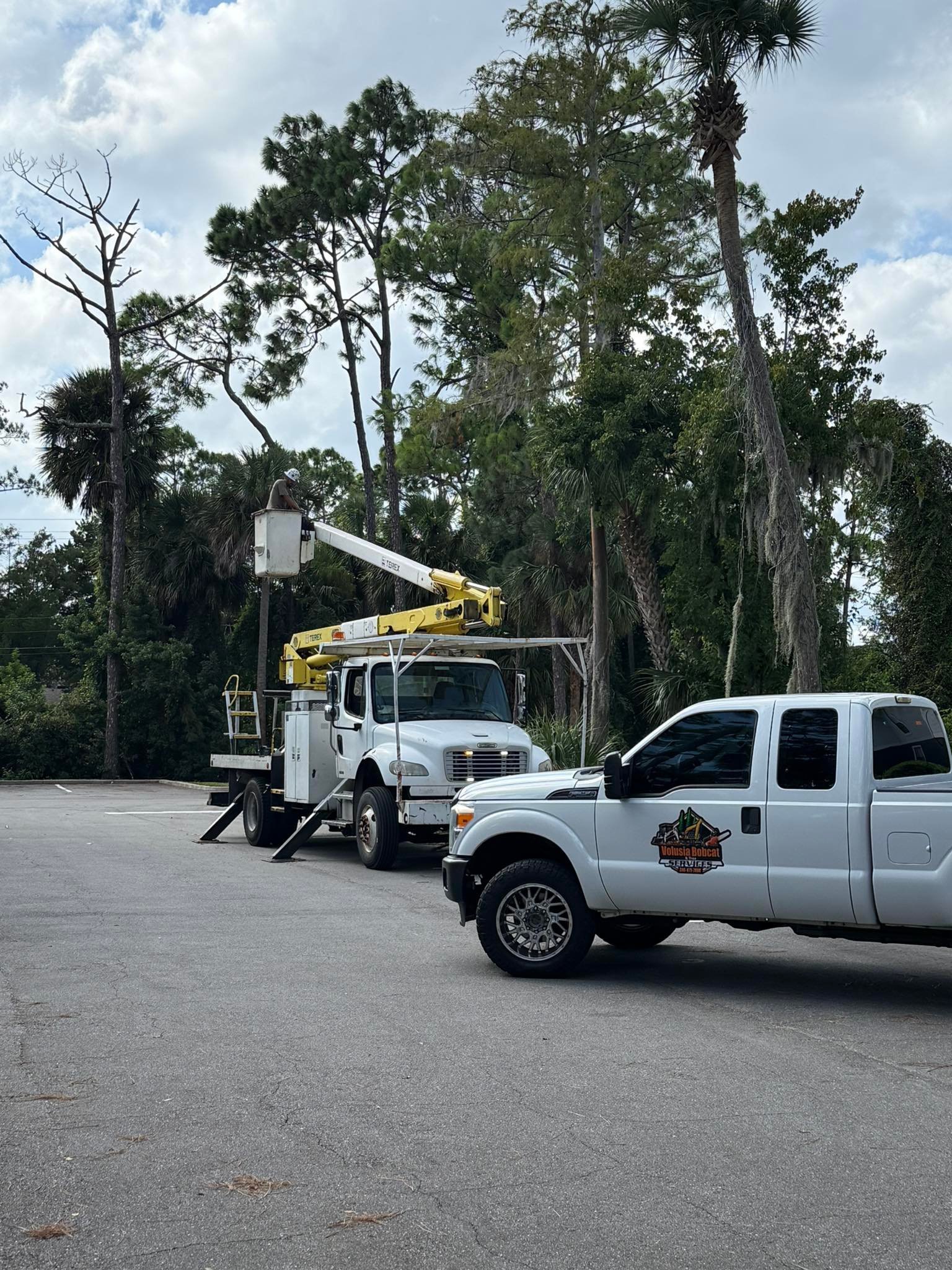
Volusia Tree Service provides 24/7 emergency tree removal and emphasizes environmentally conscious methods—such as careful sectional removal, salvage of usable wood, and rapid stabilization—to limit damage and enable timely restoration planning. Property owners are advised to contact the provider for emergency response and assessment when hazards threaten safety or landscape integrity.

This description shows how emergency readiness and sustainability can coexist, and the following section discusses replanting and restoration.

How Does Replanting and Restoration Fit into Emergency Tree Care?

Replanting and restoration are integral follow-ups to emergency removal, beginning with immediate stabilization—protecting exposed roots, addressing soil compaction, and installing erosion controls—and extending to species selection and staged planting plans that restore canopy and habitat over time. Restoration plans should prioritize native, site-appropriate species and include soil amendment, mulching, and short-term watering schedules to ensure establishment. Coordination with HOAs or municipalities can streamline approvals and align plantings with community preservation goals.

Early stabilization and planned replanting reduce erosion risks and speed ecological recovery after removals.

Why Is Rapid Response Important for Minimizing Environmental Damage?

Rapid response limits the window in which pests and diseases can exploit damaged tissue, reduces hazards that could force wider removals, and preserves salvageable wood and root systems that might otherwise degrade. Quick action also mitigates secondary impacts such as soil erosion and prolonged canopy gaps that invite invasive species. Operational readiness and trained crews enable efficient triage, reducing both environmental and public-safety risks.

Timely intervention therefore supports both human safety and ecological outcomes, completing the sustainable emergency care cycle described here.

  1. Assess the situation quickly with a focus on safety and salvage potential.
  2. Prioritize minimal-impact removal techniques to preserve adjacent vegetation and soil health.
  3. Plan restoration that uses native species and soil-first strategies to restore canopy function.

These steps summarize the operational and ecological priorities for environmentally responsible emergency tree services and illustrate how sustainable practices apply across routine care and crisis situations.

Eco-Friendly Disease Management for Forest Tree Health and Sustainability

Forests play a crucial role in maintaining ecological balance, biodiversity, and providing a myriad of ecosystem services. However, the health of forest tree species is under constant threat from various diseases, posing significant challenges to sustainable forestry practices. These diseases can result in substantial economic losses, negatively impact biodiversity, and compromise the overall health and resilience of forest ecosystems. Diseases of forest trees can be caused either by abiotic agents or by biotic agents leading to decline in growth and growth abnormalities, drying and mortality, wood destruction, wood quality deterioration, effects growth increment and reduced regeneration. The losses due to disease commence with seed deterioration affecting germinability of seeds and seedlings survival. Root rots fungi, wood-discoloration and rotting fungi, affect the merchantability of wood. Foliage disease decreases the growth and quality of the economically important trees. Recognizing the escalating importance of sustainable practices, the review then shifts focus to eco-friendly approaches. These encompass biological control agents, such as beneficial fungi and bacteria, as well as the utilization of resistant tree varieties and the implementation of cultural practices that enhance the overall health of forest ecosystems. This chapter deals with the diseases and management of important forest tree species, viz.,Dalbergia sissooRoxb. ex DC., Tectona grandisL.f., Ailanthus excelsaRoxb., Acaciasp., Prosopis cineraria(L.) Druce.

Diseases of Important Forest Tree Species and Their Management Using Eco-Friendly Approaches, N Verma, 2024