How Trees Support Water Conservation and Stormwater Management in Florida
Healthy trees are a frontline solution for water conservation and stormwater management in Florida, because they intercept rainfall, release moisture through evapotranspiration, and create root pathways that increase soil infiltration. This article explains those mechanisms, ties them to Florida’s sandy soils and intense rainfall events, and shows property-level steps homeowners and managers can use to reduce runoff and protect water quality. Many Florida properties face rapid runoff, clogged drains, and reduced groundwater recharge; trees act as green infrastructure that moderates the water cycle and improves soil health. Readers will learn how canopies and roots work together, which drought-tolerant trees perform best in Southwest Florida conditions, practical water-wise care practices, and how trees fit into stormwater control designs. The guide also covers emergency signs that require immediate tree work, post-storm recovery priorities, and Florida-friendly planting tips that lower long-term irrigation needs. Throughout, the content integrates local considerations—sandy soils, coastal salt tolerance, and seasonal storms—while pointing to practical service pathways for assessment and implementation.
How Do Trees Help with Water Conservation in Florida?
Trees save water in three major ways: their canopies intercept and slow rainfall, evapotranspiration returns moisture to the atmosphere reducing surface pooling, and roots create pathways that improve soil infiltration and groundwater recharge. These mechanisms reduce peak stormwater runoff, lower erosion risk, and enhance onsite water retention—benefits that are especially valuable in Florida’s sandy, fast-draining soils. Healthy tree cover also filters pollutants from surface flows, improving downstream water quality and reducing sediment loads in coastal waterways. Understanding these functions helps homeowners and managers prioritize tree conservation and planting strategies that reinforce the local water cycle and resilience to intense storms.
Trees’ canopy interception reduces the initial energy and volume of rainfall reaching the ground, which slows runoff and gives soil more time to absorb water. That canopy effect leads naturally to considering root-zone health, because roots determine how much of the intercepted water actually infiltrates. The next subsections unpack canopy interception, root-driven infiltration, and how tree health supports water quality and soil structure.
What Is the Role of Tree Canopies in Reducing Stormwater Runoff?
Tree canopies intercept rainfall by capturing drops on leaves and branches and by slowing wind-driven rainfall, which reduces runoff velocity and peak flow into drains. Interception can vary by species and canopy density, but mature shade trees often cut peak runoff during short, intense storms by delaying and redistributing water. In Florida’s frequent heavy downpours, canopy interception reduces rapid surface flows that otherwise erode sandy soils and overwhelm gutters and culverts. This canopy function pairs with groundcover and mulch to further slow runoff and promote infiltration.
Canopy interception also reduces the energy of falling rain, which lessens soil particle displacement and protects surface structure. That protective effect transitions into a root and soil conversation, since healthier soils are better at capturing and storing the water canopies release slowly. The next section explains how roots and soil interact to sustain infiltration and recharge.
How Do Tree Roots Improve Soil Infiltration and Groundwater Recharge?
Tree roots increase soil porosity by creating macropores and organic channels that let water penetrate deeper than surface raindrops would allow on compacted ground. In Florida’s sandy soils, deep-root systems anchor trees while creating preferential flow paths that help move water into subsurface layers and support groundwater recharge. Roots also cycle organic matter into the soil, improving structure and moisture-holding capacity over time. These root-driven processes reduce surface runoff volume and contribute to drought resilience by storing more water in the root zone.
As root systems develop, they also support associated soil biota that further enhance aggregate stability and infiltration rates. That biological improvement enhances water-quality benefits, which the next subsection addresses in terms of pollutant capture and soil health.
Why Are Healthy Trees Essential for Water Quality and Soil Health?
Healthy trees act as living filters: leaf litter, root uptake, and microbial activity trap sediments and absorb nutrients and pollutants that would otherwise flow into waterways. Trees remove nitrogen and phosphorus through uptake and by promoting microbial processes in the soil that transform or immobilize contaminants. Stable root systems reduce erosion, keeping sediment out of storm drains and coastal estuaries. Monitoring tree health and maintaining canopy and root vigor therefore directly supports both water-quality objectives and long-term soil structure improvements.
Maintaining tree health links directly to practical care practices—mulching, proper watering, and pruning—that conserve water and sustain filtration functions. Those care practices are explored in the next major section, which outlines homeowner-friendly actions that improve both tree resilience and property-level water outcomes.
Which Drought-Tolerant Trees Are Best for Florida Landscapes?
Choosing drought-tolerant trees for Florida focuses on species adapted to sandy soils, episodic rainfall, and occasional salt spray near coasts; ideal choices combine deep root systems, efficient canopy architecture, and tolerance for local pests and storms. Below is a compact comparison table designed for Southwest Florida conditions to help homeowners and landscape managers match species to site characteristics and water-related benefits. After the table, short species notes explain practical trade-offs and placement tips for maximizing water savings.
| Species | Drought Tolerance | Soil Type | Mature Size | Benefits (water-related) |
|---|---|---|---|---|
| Live Oak (Quercus virginiana) | High | Sandy to loamy | Large | Deep roots improve infiltration; extensive canopy intercepts rainfall |
| Southern Magnolia (Magnolia grandiflora) | Moderate-High | Sandy, well-drained | Medium-Large | Dense canopy reduces runoff; good leaf litter for soil organic matter |
| Sand Live Oak (Quercus geminata) | High | Very sandy, coastal | Small-Medium | Salt and drought tolerant; stabilizes dunes and sandy soils |
| Slash Pine (Pinus elliottii) | Moderate | Sandy, well-drained | Large | Fast-growing root systems enhance early infiltration; suitable for buffers |
| Cabbage Palm (Sabal palmetto) | High | Sandy, coastal | Medium | Tolerant to salt and low water; low canopy maintenance and deep roots |
This table shows species that balance drought tolerance, soil compatibility, and water-management benefits. Choosing the right species for microclimates and soil types reduces long-term irrigation and supports stormwater objectives.
What Native Florida Trees Require Less Water and Thrive in Sandy Soils?
Native options such as sand live oak, live oak, and cabbage palm are particularly well adapted to Florida’s nutrient-poor, fast-draining soils and generally require less supplemental irrigation once established. These species develop root systems that explore deep sand layers and support soil stabilization, helping retain rainfall and lower runoff potential. Native trees also support local ecology and are more resilient to regional pests and climatic stresses than many non-natives. Selecting native, drought-tolerant trees reduces maintenance and water inputs while improving long-term landscape performance.
Because native choices vary by micro-site, property owners should match species to salt exposure, shade needs, and overhead utilities. The following subsection gives selection and planting steps to ensure successful establishment with minimal watering.
How to Select and Plant Drought-Resistant Trees for Southwest Florida?
Select planting sites by assessing soil texture, drainage patterns, wind exposure, and available rooting space; choose species with root habits and canopy sizes appropriate for each site. Planting practices that reduce long-term water needs include placing trees where they will receive appropriate sun/shade, preserving existing understory to protect root zones, and avoiding excessive soil amendments that can encourage shallow roots. Right-tree-right-place decisions reduce future irrigation and pruning needs while supporting stormwater functions. A simple planting checklist includes site assessment, species-match, proper hole sizing, and mulching to conserve moisture.
Proper selection leads into efficient establishment practices for new trees, which the next subsection addresses with targeted watering strategies for dry periods.
How Should New Trees Be Watered Efficiently During Dry Periods?
New trees establish best with deep, infrequent watering that encourages roots to grow downward rather than outward shallowly. Use slow-release methods like soaker hoses or deep-watering basins to deliver water to the root ball; avoid frequent shallow sprinkling that increases evaporation and surface runoff. Apply mulch in a 2–4 inch layer to conserve moisture and regulate soil temperature, keeping mulch away from the trunk flare. Adjust watering frequency seasonally: more frequent during initial establishment and dryer months, less during rainy periods, to conserve water while ensuring root development.
Efficient early watering sets the stage for long-term drought resilience and reduces dependence on supplemental irrigation, a benefit reinforced by routine maintenance such as mulching and periodic assessment.
What Are Water-Wise Tree Care Practices for Florida Homeowners?
Water-wise tree care centers on mulching, efficient irrigation, proper pruning, and soil management; these practices reduce evaporation and runoff while promoting deep rooting and overall tree health. Implementing these measures reduces the frequency and volume of supplemental watering, enhances stormwater infiltration, and lowers maintenance costs over time. The following table compares common practices by what they affect, recommended timing, and direct benefits to water conservation. After the table, practical lists outline steps homeowners can adopt immediately.
| Practice | Attribute (what it affects) | Recommended Frequency/Timing | Benefit to Water Conservation |
|---|---|---|---|
| Mulching | Soil moisture, temperature | Apply annually; refresh as needed | Reduces evaporation; lowers irrigation needs |
| Deep watering | Root depth and strength | Weekly to biweekly during dry spells (establishment) | Encourages deep roots; reduces surface runoff |
| Pruning (structural) | Canopy health and storm readiness | Every 2–4 years or as needed | Maintains healthy canopy for interception |
| Soil aeration/organic amendment | Infiltration and porosity | As needed based on compaction | Improves infiltration and moisture retention |
This comparison helps prioritize actions that give the biggest water conservation return for effort and cost. Next, a concise set of homeowner-friendly practices provides immediate steps to implement these principles.
- Mulch correctly to conserve moisture and protect roots:Apply a 2–4 inch layer of organic mulch around trees, keeping mulch pulled back from the trunk flare.Use shredded hardwood or pine bark for longer-lasting coverage that reduces irrigation frequency.Refresh mulch annually and avoid thick “volcano” mounds that trap moisture against the trunk.These mulching steps lower evaporation and support root-zone moisture, which leads naturally to efficient irrigation techniques discussed next.
- Use deep-watering techniques and smart irrigation:Water slowly and deeply with soaker hoses or root-basin watering to encourage downward root growth.Reduce watering frequency during wet seasons and increase during prolonged dry periods.Consider soil moisture sensors or manual checks before applying water to avoid waste.Efficient irrigation integrates well with pruning practices, which support canopy and root health and are covered in the following subsection.
How Does Proper Mulching Help Retain Soil Moisture Around Trees?
Mulch conserves soil moisture by reducing direct sun and wind exposure at the soil surface, moderating temperature swings and slowing evaporation. A correctly applied mulch layer also suppresses competing weeds, reducing competition for limited moisture and concentrating water availability within the tree root zone. Organic mulches decompose over time, increasing soil organic matter and improving moisture-holding capacity—especially valuable in sandy Florida soils. Proper application avoids touching the trunk and maintains a shallow, even layer that supports infiltration rather than creating anaerobic conditions.
Mulching’s moisture benefits are complemented by irrigation choices that deliver water efficiently to the root zone, which is the focus of the next subsection.
What Are Efficient Irrigation Techniques for Established Trees?
For established trees, deep, infrequent irrigation encourages roots to seek moisture deeper in the soil profile, improving drought resilience and reducing evaporation losses. Drip irrigation or bubbler systems that target the root spread are more effective than overhead sprinklers, as they place water where roots can access it and limit surface runoff. Soil moisture sensors or manual probing help fine-tune schedules to actual conditions, conserving water during wet periods and delivering water when truly needed. Proper irrigation design reduces overall water use while maintaining healthy trees capable of fulfilling stormwater functions.
Targeted irrigation ties into pruning practices that optimize canopy structure and reduce stress during droughts; pruning guidance follows next.
How Does Pruning Improve Tree Health and Drought Resilience?
Pruning reduces structural defects, removes deadwood, and helps shape canopies so that branches are less prone to wind damage and less likely to shed large limbs that can block drainage. Correct pruning promotes balanced leaf area relative to available root moisture, reducing stress and improving drought tolerance. Timing pruning outside of peak heat and storm seasons reduces stress and allows trees to direct resources to root growth and recovery. When homeowners notice decline or structural issues, professional pruning ensures objectives are met without excessive canopy loss that could increase irrigation needs.
Pruning and irrigation together maintain tree health, which enhances both everyday water-wise performance and storm-readiness—topics the next H2 explores through stormwater design and control.
How Can Trees Be Used for Stormwater Management on Florida Properties?
Trees function as practical green infrastructure on properties by intercepting rainfall, stabilizing soils with roots, and integrating with other measures like rain gardens and permeable paving to reduce runoff and protect water quality. Properly sited trees can form vegetated buffers along drainage ways, slow overland flows, and anchor soil to prevent erosion during storms. Compared to hard infrastructure alone, tree-based systems provide co-benefits—shade, habitat, and evapotranspiration—while reducing peak flows and sediment transport. Designers should combine trees with bioswales, rain gardens, and permeable surfaces to create layered stormwater strategies that fit Florida’s climate and site constraints.
Implementing tree-based stormwater strategies requires consideration of species, placement relative to flow paths, and maintenance regimes; the next subsections outline mechanics, species selection, and clearing impacts to guide property-scale planning.
How Do Tree Canopies and Roots Prevent Flooding and Erosion?
Canopies reduce the velocity and volume of rain reaching the ground, while roots bind soil and create a porous structure that absorbs and transmits water below the surface. This dual action reduces concentrated flows that cause gullying and protects shorelines and slopes from washout. Vegetated buffers with continuous canopy and understory intercept and slow runoff across a landscape, allowing more time for infiltration and sediment settling. In practice, pairing canopy cover with groundcover and mulch maximizes combined benefits against flooding and erosion.
Effective buffering leads to species choices that can tolerate periodic inundation or fast flows—choices covered in the next subsection.
What Tree Species Are Most Effective for Stormwater Control in Florida?
Species effective for stormwater control combine broad canopies with deep, fibrous roots; live oaks, slash pines, and certain magnolias are often selected for buffers because they intercept rain and stabilize soils. Trade-offs include root invasiveness near structures and maintenance needs for large canopies; placement away from hard infrastructure minimizes conflicts. In coastal or saline environments, salt-tolerant options such as cabbage palm and sand live oak perform well while still contributing to infiltration and runoff reduction. Selecting the right species balances stormwater objectives with property constraints and long-term maintenance plans.
Species selection ties into land-clearing decisions, since removing vegetation without a plan can worsen runoff—this topic is addressed next.
How Does Land Clearing Affect Water Flow and Tree-Based Stormwater Solutions?
Removing trees and vegetation increases runoff rates, reduces infiltration, and often leads to sediment transport into waterways unless clearing is carefully managed. Thoughtful clearing retains buffer strips, stages removal to avoid exposing large areas at once, and implements erosion controls such as temporary silt fences and prompt replanting. Retaining key root systems and replanting with appropriate species helps preserve infiltration capacity and reduces the need for engineered stormwater controls. When clearing is necessary for development or access, integrate grading plans and vegetated swales to maintain or improve pre-clearing hydrology.
When clearing or grading is needed, professional assessment ensures stormwater outcomes are considered; the next H2 explains when emergency tree services are needed to protect water flow and property.
When Are Emergency Tree Services Needed to Prevent Water-Related Damage?
Emergency tree services are warranted when tree conditions pose immediate risk to drainage, structures, or safe water flow—situations such as major leaning, root plate failure, or large limbs blocking critical drains require prompt action. Delays in addressing these hazards can lead to blocked culverts, localized flooding, and increased erosion during subsequent storms. Quick assessment and removal reduce the chance that fallen trees will create obstructions in waterways or exacerbate flooding. Below is a checklist of danger signs to watch and a list-style guidance for immediate steps property owners can take before professional crews arrive.
- Signs a tree needs urgent attention:Visible lean that has developed suddenly or after a storm.Uplifted or heaving soil around the base indicating root failure.Large limbs fallen and blocking drainage channels or access routes.Rapid canopy dieback or split trunks following strong winds.These signs indicate a high risk of tree failure that can block water flow and cause damage; if any are present, seek a professional assessment as soon as possible.
- Immediate homeowner actions while arranging service:Keep people and pets away from the hazard area and marked drainage paths.Remove small debris that is not structurally attached to avoid clogging drains.Photograph the issue for assessment and insurance records, then schedule removal with a qualified provider.Taking these steps minimizes further blockage and prepares property owners for efficient emergency response once help is arranged.
How to Identify Trees Prone to Storm or Flood Damage in Florida?
Trees at risk often show structural indicators such as root rot, exposed or heaving roots, sudden leaning, large cracks in the trunk, or extensive canopy dieback; these signs suggest diminished anchorage or structural integrity. Flooded soils that persist for days can cause root suffocation and increase susceptibility to windthrow, while hollow or decayed trunks reduce load-bearing capacity. Inspecting trees after storms for new damage and monitoring for gradual changes helps identify candidates for professional assessment. Regular inspections are especially critical near drainage ways, driveways, and structures where failure would block water flow or cause property damage.
Early identification supports timely removal or reinforcement, which decreases downstream blockage risk and is covered in the next subsection about removal timing.
Why Is Fast Tree Removal Important After Storms to Protect Water Flow?
Fast removal of storm-damaged trees prevents large woody debris from lodging in culverts, under bridges, or against bridge abutments where they can quickly stop flow and cause upstream flooding. Prompt action also reduces sediment mobilization from decaying root systems and exposed soil, which can clog conveyances and degrade water quality. A timely removal reduces hazards for emergency responders and shortens the window when blocked drains can cause property flooding. For properties in flood-prone areas, quick removal is a critical step in post-storm water management and recovery.
When immediate removal is not possible, temporary measures such as diverting flow or protecting vulnerable inlets can reduce damage until professionals can clear debris; the following subsection outlines recovery steps.
What Post-Storm Tree Care Supports Landscape Recovery and Water Management?
Post-storm recovery should prioritize clearing drainage paths, removing hazard limbs, and stabilizing soils with mulch or temporary erosion controls to restore infiltration and limit sediment movement. After hazards are addressed, prune for long-term structure, amend compacted soils to re-establish infiltration, and replant appropriate species in heavily damaged areas. Prioritizing rapid debris removal in drainage corridors prevents recurring blockages during follow-up rain events. When recovery requires heavy equipment or large removals, professional crews help ensure safe, effective restoration while maintaining water-management objectives.
When hazards are significant or urgent, contact 24/7 emergency services to assess and remove blockage quickly; Florida Tree and Ground Maintenance (operating as Volusia Tree Service) provides round-the-clock emergency removal with fast response to protect water flow and reduce further damage.
How Does Florida Tree and Ground Maintenance Support Water Conservation?
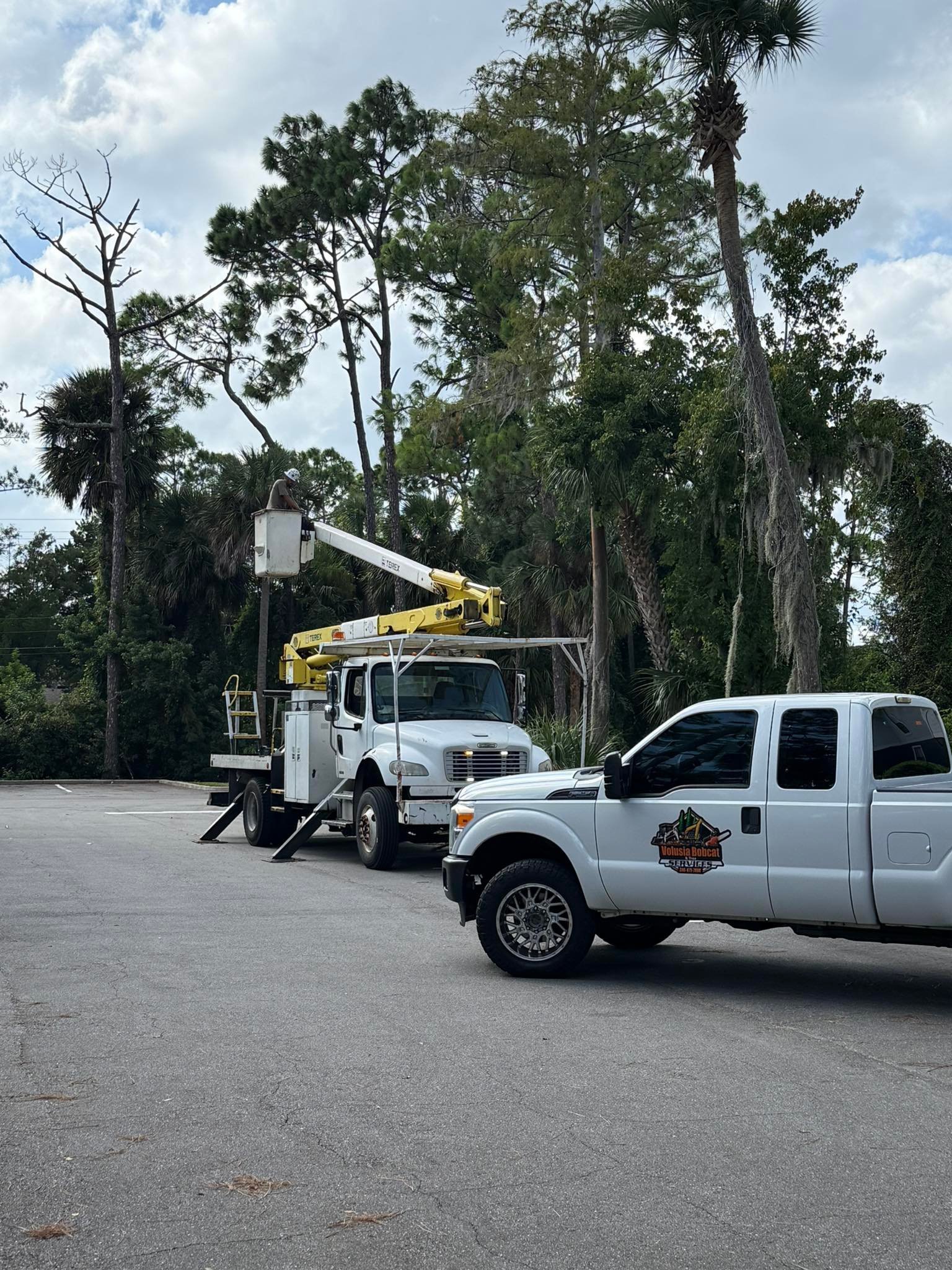
Florida Tree and Ground Maintenance, operating as Volusia Tree Service, maps traditional tree services to water-wise outcomes by using trimming, removal, stump grinding, and conscientious land clearing to protect drainage, improve infiltration, and prepare sites for low-water landscapes. Professional trimming enhances canopy function and reduces the risk of storm damage that can block drains, while emergency removal reduces immediate obstructions to water flow. Stump grinding after removals eliminates debris that can trap sediment and creates clean planting sites for water-conserving species, and responsible land clearing retains buffer strips and supports planned infiltration. The company highlights licensed and insured crews, fast response times, free estimates, and 24/7 emergency availability as practical advantages for property owners needing timely interventions.
Below is a concise mapping of services to typical water-management problems and expected outcomes to help property owners decide when to call for specialized work.
| Service | Problem Addressed | Typical Outcome | When to Call (signs) | Contact CTA |
|---|---|---|---|---|
| Tree Trimming | Overgrown canopy, storm-prone branches | Improved canopy interception; reduced limb failure | Large dead branches; structural imbalance | Request a free estimate for trimming assessment |
| Emergency Tree Removal | Fallen/blocked trees in drainage lines | Restored water flow; reduced flood risk | Leaning trees, blocked culverts, root plate failure | 24/7 response available for immediate assessment |
| Stump Grinding | Debris that traps sediment and prevents replanting | Smooth site for replanting, reduced debris obstruction | Old stumps in drainage paths or planting sites | Free stump grind with removal special applies |
| Land Clearing | Sites needing redevelopment or hazard removal | Planned clearing with retained buffers; improved grading | Recent clearing causing increased runoff or erosion | Schedule a site assessment for water-wise clearing plan |
This service mapping clarifies how professional interventions restore or enhance property-level water performance. For homeowners and HOAs, combining these services with water-wise planting and ongoing care offers measurable improvements in runoff reduction and landscape resilience.
How Do Our Tree Trimming Services Enhance Drought Resilience and Storm Preparedness?
Professional trimming focuses on removing deadwood, improving branch structure, and shaping canopies so trees shed wind and water loads more safely while maintaining interception capacity. Proper trimming reduces the likelihood of limb failure that can block drains and creates a healthier balance between leaf area and root support, improving drought resilience. Trained crews also identify declining trees that may need further action to prevent waterway obstructions during storms. Regular, targeted trimming thus supports both everyday water conservation and emergency preparedness.
Well-executed trimming complements emergency readiness and is a preventive investment that lowers the probability of costly removals after storms.
What Value Does Our Emergency Tree Removal Provide for Flood-Prone Properties?
Rapid emergency removal eliminates immediate threats to water conveyance and reduces the time debris remains in channels where it can trap sediment and obstruct flow. For flood-prone properties, a fast-response removal minimizes the chance of secondary flooding caused by blocked culverts or inlet structures. The company’s 24/7 availability, licensed and insured crews, and emphasis on fast response help property owners stabilize water flow quickly after damaging events. These features can shorten recovery timelines and reduce downstream impacts on neighboring properties and waterways.
Timely emergency removal pairs with follow-up actions—stump grinding and replanting—to restore long-term hydrologic function on affected sites.
How Can Our Land Clearing Prepare Your Property for Water-Wise Landscaping?
Thoughtful land clearing creates space for water-wise designs while preserving vegetated buffers and minimizing exposed soil that increases runoff. The service begins with a site assessment to identify trees and strips to retain, grading approaches to preserve infiltration, and replanting recommendations that prioritize drought-tolerant natives. Proper sequencing—clearing, stabilizing soils, and installing low-water plantings—prevents the common pitfall of increased runoff after indiscriminate clearing. Scheduling a professional assessment ensures clearing improves, rather than degrades, property hydrology.
Engaging expert clearing services early in a project helps integrate trees into long-term stormwater strategies and reduces the risk of unintended runoff increases.
What Are Florida-Friendly Tree Planting Tips for Sustainable Water Use?
Strategic planting reduces irrigation needs and enhances landscape resilience: match tree water needs to site moisture, place shade trees to reduce evapotranspiration from lawn areas, and design root space to promote deep rooting. These Florida-friendly techniques include right-tree-right-place assessments, careful planting that preserves the root flare, and integrating trees into xeriscape plans where they provide shade and deep-root stability for low-water groundcovers. The following numbered planting steps are a practical checklist to maximize water conservation from day one.
- Assess site water conditions and microclimate:Identify drainage paths, soil texture, sun exposure, and nearby salt spray to match species appropriately.Prefer drought-tolerant natives for dry sandy sites and salt-tolerant species for coastal exposures.Consider mature size and placement to avoid future conflicts with structures or utilities.
- Use correct planting techniques:Dig a hole no deeper than the root ball and 2–3 times as wide to encourage lateral root growth.Position the root flare at or slightly above grade and backfill with native soil to avoid creating a perched root zone.Mulch around the root zone to conserve moisture, maintaining a 2–4 inch depth and keeping mulch clear of the trunk.
- Integrate trees into low-water landscape designs:Place trees to shade high-evaporation surfaces like patios and south-facing walls.Combine trees with permeable pavements, rain gardens, and groundcovers that reduce overall irrigation demand.Plan for staged irrigation reduction as trees establish, switching to deep, infrequent watering schedules.
These planting tips reduce initial water needs and set the foundation for durable, low-maintenance landscapes that support stormwater and conservation goals.
How to Choose the Right Tree for Your Florida Property’s Water Conditions?
Selecting the right tree means matching species’ drought tolerance, salt tolerance, and mature root habit to the site’s water availability and soil type. Start by assessing high and low moisture zones, existing drainage patterns, and exposure to salt or wind, then choose species that thrive under those conditions. Consider long-term functions—shade, buffer, or stabilizer—so the tree provides water-management benefits appropriate to its location. Proper species selection reduces future irrigation and maintenance while supporting landscape hydrology.
These selection choices guide specific planting and installation steps that maximize water conservation, described in the next subsection.
What Are Best Practices for Planting Trees to Maximize Water Conservation?
Best practices emphasize establishing deep roots quickly and avoiding common mistakes that increase water demand. Plant with the root flare at grade, avoid excessive fertilization that encourages shallow rooting, and apply mulch to preserve moisture and moderate soil temperature. Use slow, deep watering methods during establishment and transition to infrequent schedules once roots reach beyond the original root ball. Avoid over-tilling or adding heavy organic mixes that can create an artificial soil layer that retains water at the surface but prevents deeper rooting.
Following these steps produces trees that rely less on supplemental irrigation and more on natural infiltration—an outcome reinforced by integrating trees into xeriscapes, addressed next.
How Do Trees Fit into Xeriscaping and Low-Water Landscape Designs?
In xeriscapes, trees serve as deep-rooted anchors that provide shade and microclimate moderation, reducing evaporation from surrounding plants and soils. Strategically placed trees can lower ambient temperature, decrease irrigation needs for adjacent plantings, and protect permeable surfaces from compaction and runoff. Combine trees with drought-tolerant shrubs, native groundcovers, and mulched planting basins to create layered systems that support infiltration and minimize water use. Thoughtful design ensures trees complement low-water plant palettes while delivering stormwater benefits that hardscaping alone cannot provide.
Integrating trees into low-water designs completes a property-scale approach that conserves water, improves storm resilience, and reduces long-term maintenance.