
In this guide: Identify every stump in the scope · Discuss access and buried facilities · Agree on depth and the next use · Decide what happens to the chips · Compare written estimates
Identify every stump in the scope
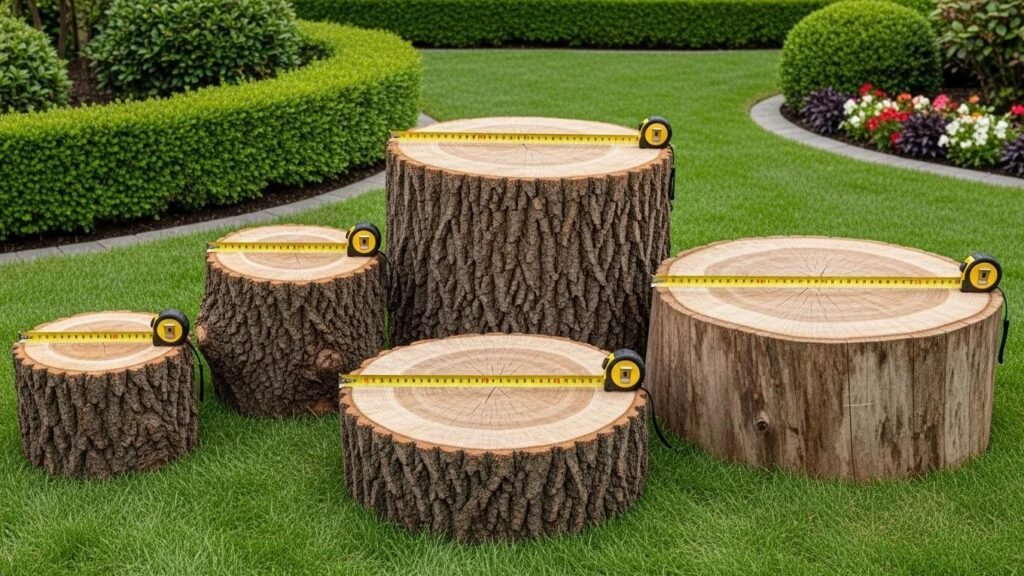
Provide the approximate location and photographs, including nearby fences or paving. Describe any visible root flare rather than measuring only the narrowest trunk section. Multiple stumps should be listed so the crew and owner agree on the work.
Discuss access and buried facilities
Note gate openings, changes in grade and known irrigation or private lines. Before ground-disturbing work, coordinate appropriate utility locating and identify facilities that may not be covered by a public locate. Do not assume a small machine can reach every backyard.
Agree on depth and the next use
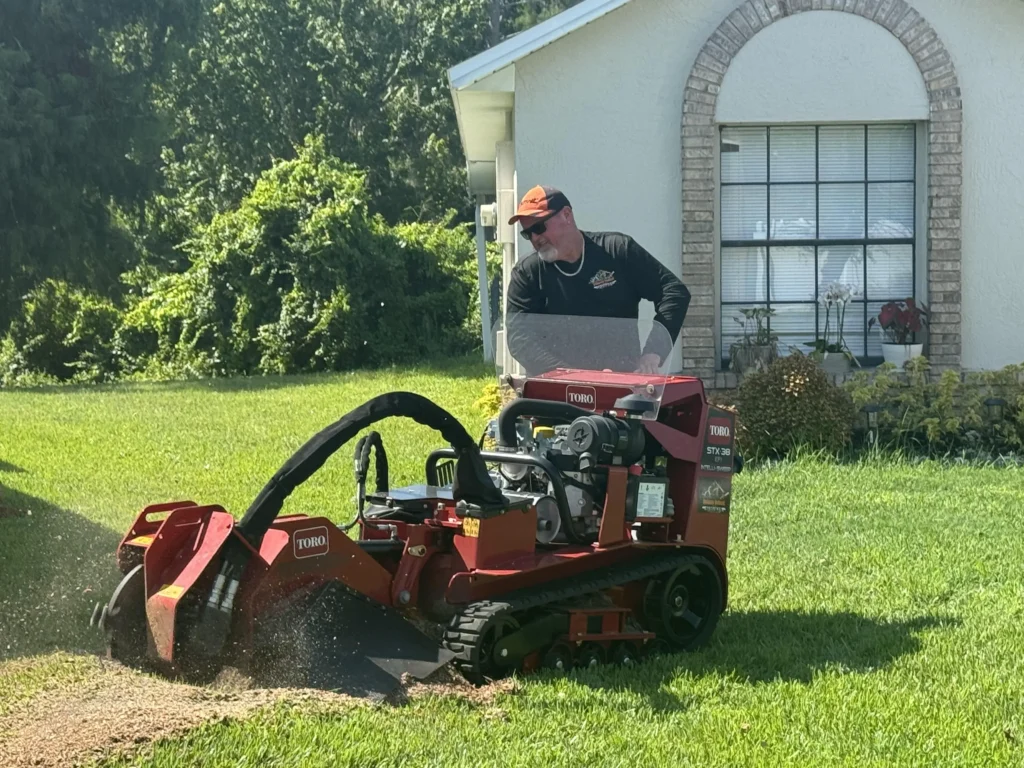
Tell the estimator whether the area will become lawn, a bed, a walkway or a construction space. The intended use affects the scope. Grinding does not automatically remove every root, create a planting hole or make the site ready for a foundation.
Decide what happens to the chips
Ask whether chips stay, are spread in an agreed location or are hauled away. Filling and grading should be specified separately if needed. A clear finishing instruction prevents disagreement over a mound of grindings left after an otherwise completed job.
Compare written estimates
Review access assumptions, stump identification, finishing and exclusions. Ask about the current price-match and 100% satisfaction guarantees. A universal per-stump range cannot describe every wood type, location and finish.
Related services and planning guides
Sanford tree removal · Grinding versus removal