
01
Make lawn maintenance easier
Remove the visible obstruction and discuss the level needed for future soil and turf. Grinding alone does not create a finished lawn.
The tree is gone. Finish the space.
A leftover stump can interrupt mowing, create a trip hazard or block a landscaping plan. Stump grinding breaks down the stump below the surface. Before work begins, decide what the area will become and confirm access, buried features, the agreed grinding depth and what happens to the wood chips.
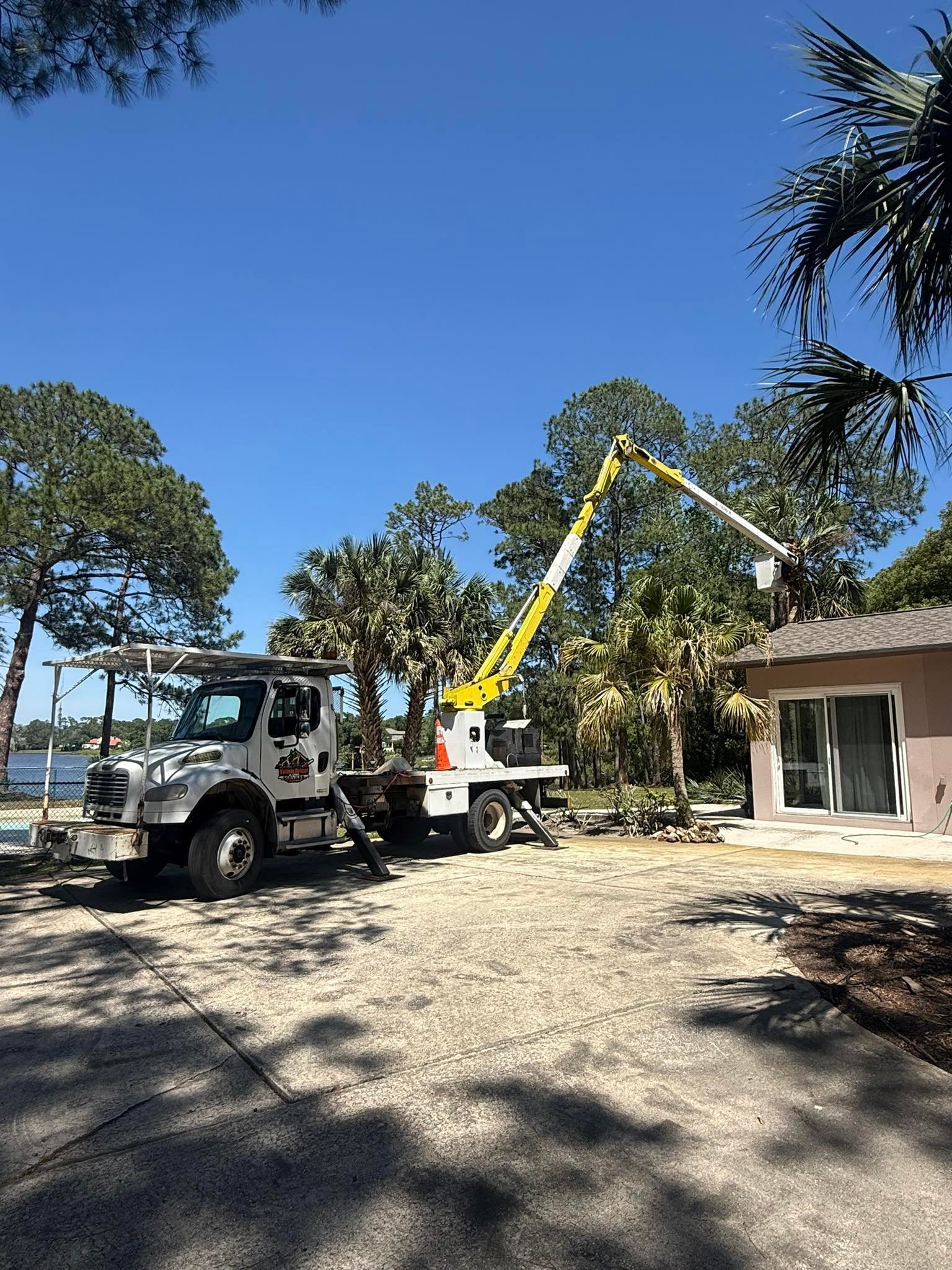
A useful scope starts here
Grinding a stump is different from excavating the entire root system. Roots may remain beyond the ground area. A lawn repair, new planting, fence post and construction project can have different needs, so explain the intended use before the work is quoted.
01
Remove the visible obstruction and discuss the level needed for future soil and turf. Grinding alone does not create a finished lawn.
02
Share planting and edging plans. The placement of remaining roots and grindings can affect how you prepare a new planting area.
03
Coordinate removal and grinding to avoid leaving the stump as an unplanned second job. Make the inclusions clear in the original quote.
DeLand property considerations
Before grinding at a DeLand property, identify irrigation lines, drainage, lighting cables, septic features and other buried improvements. Arrange the appropriate utility-locating process and point out privately installed systems separately. Measure gates and note steps, slopes, soft ground and access across neighboring property.
From the call to the work zone
01
Send the stump diameter, number of stumps, access details and a photo from a safe location. Mention exposed roots or embedded objects.
02
Discuss utility markings and private irrigation, lighting, drainage or septic features before the machine reaches the stump.
03
Set the grinding area and depth, and confirm whether grindings are left, spread or hauled away.
04
Discuss backfill, settling, soil and turf or planting work. List restoration separately if it is not included.
Useful answers. No guesswork.
No. Grinding reduces the stump and any roots included in the agreed scope. Roots beyond that area can remain; full root excavation is a different type of work.
Agree on the depth for your intended use before the job. Access, obstacles, stump condition and buried features can affect what is practical. Avoid assuming a universal depth is included.
Grinding produces a mix of wood and soil. Ask whether it will stay on site, be spread or be hauled away. Removal, imported soil and turf are separate scope decisions.
The remaining roots, grindings and available soil need assessment. A nearby planting position may offer better conditions; discuss site preparation and species choice before replanting.
Measure the narrowest access point and mention turns, steps and slopes. Access needs to be checked against the machine selected for your job.
Keep your whole project connected
Explain whether the space will become lawn, a planting bed or a fence line. Grinding and complete root excavation are different scopes; discuss the finish your project actually needs.
Identify each stump, keep residents informed of the work area, and plan access around vehicles and pedestrians. Confirm who handles wood chips, backfill and final landscaping.
Measure the narrowest access point and describe slopes, steps and soft ground. The machine and work plan must suit the route; do not assume every stump can be reached with the same equipment.
Have a property near DeLand? Share its exact address and access details. See the DeLand service-area guide for local planning information.
Plan your next step
Grass, a garden, a fence and construction have different finishing needs. Explain your intended use before agreeing on depth.
Read the preparation guide →Mention gate width, slopes, irrigation and known underground features before equipment arrives.
Discuss your property →Ask whether grindings stay, whether hauling is included and who handles soil, settling and final landscaping.
Compare estimate scope →Your next step
Tell us where the property is in DeLand, what needs attention and how to reach you. We’ll use those details to discuss an estimate. For an active hazard, call instead.
(386) 675-7898Free estimates • Residential & commercial
A few details help us plan the next step.