01
Overgrown residential property
Open usable areas while identifying retained trees, fences, irrigation, sheds and other improvements that equipment must avoid.
Clear a purpose. Keep a plan.
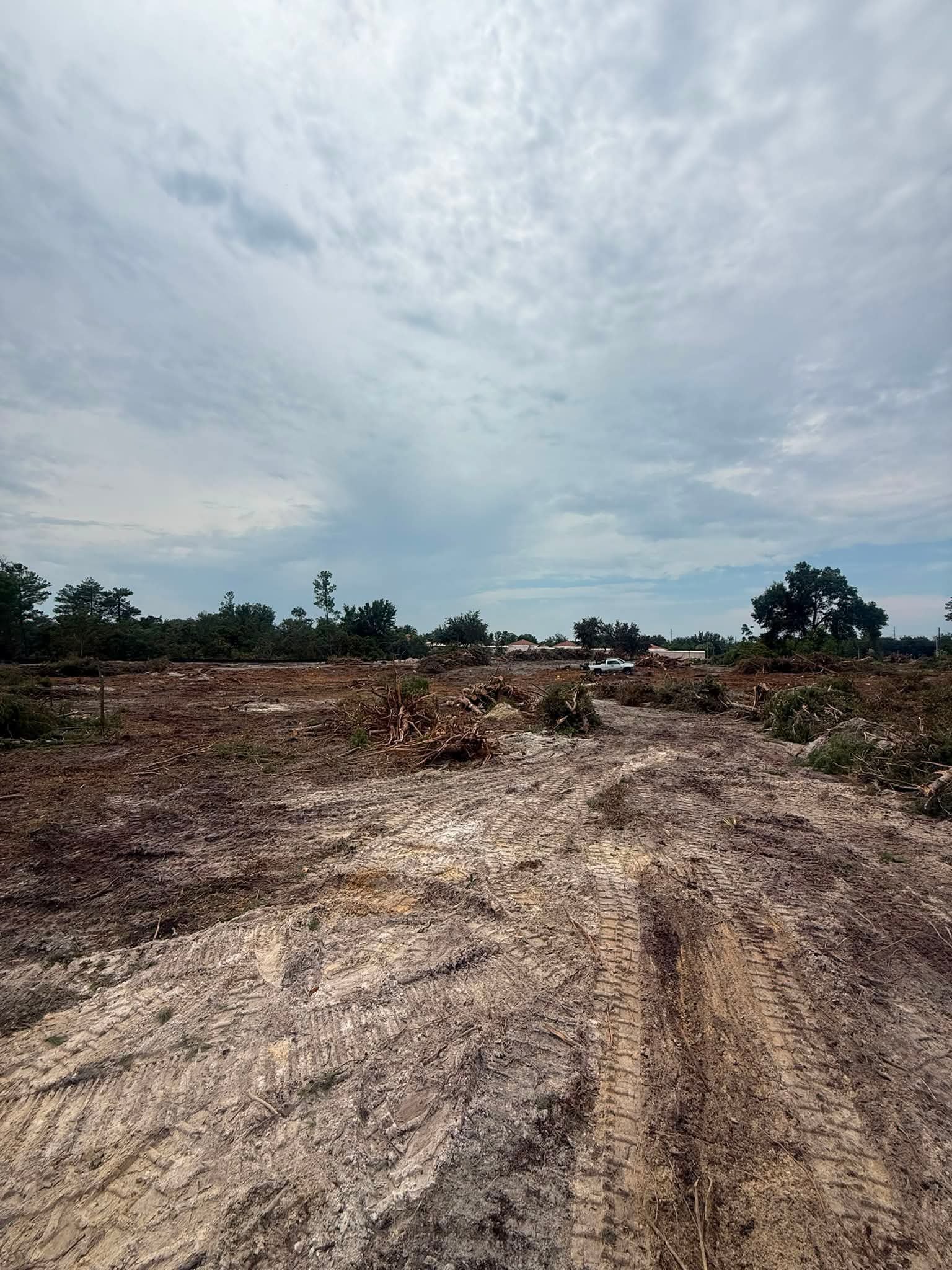
A useful clearing job starts with what the land needs to do next. We discuss brush, undergrowth, trees, stumps and debris in relation to access, boundaries and the vegetation you want to keep. The scope should describe the finished area—not just promise to “clear the lot.”
A useful scope starts here
Selective brush clearing, forestry mulching, tree removal and debris hauling do different jobs. Mulching can leave processed organic material on site; hauling removes material. Clearing does not automatically include grading, drainage work, root excavation, fill or a construction-ready pad.
01
Open usable areas while identifying retained trees, fences, irrigation, sheds and other improvements that equipment must avoid.
02
Define the corridor width and limits. Confirm the boundary and any access permission before vegetation is removed.
03
Clarify the intended use, retained vegetation, access route, disposal method and approvals needed before work begins.
DeLand property considerations
For a parcel with a DeLand address, establish city or county jurisdiction, property boundaries and the proposed clearing area. Tree requirements, site conditions and any environmental restrictions need to be resolved before equipment starts. DeLand’s tree-permitting resources and Volusia County’s tree guidance are useful starting points; neither replaces a parcel-specific review.
Helpful official resources
City of DeLand: tree permitting and worksheets ↗ Volusia County: tree-permitting questions ↗From the call to the work zone
01
Explain whether the goal is visibility, access, maintenance, landscaping or preparation for another contractor.
02
Identify boundaries, retained trees, utility features, fences and vegetation outside the work limits.
03
Compare mulching versus hauling and specify tree, stump and root work. Clarify what is excluded.
04
Plan equipment entry, material staging and the work sequence around ground conditions and other trades.
Useful answers. No guesswork.
Clearing is the overall removal or management objective. Forestry mulching is one method that processes suitable vegetation into material left on the ground. Haul-off, stump work and grading are separate decisions.
Only if the agreed scope and approvals cover that result. Brush clearing alone is not grading, compaction, drainage design or foundation preparation. Coordinate with the appropriate project professionals.
Selective clearing can be discussed. Mark the trees and areas to retain and plan equipment movement to reduce damage to their trunks and root zones.
Area is only part of the quote. Vegetation density, tree and stump sizes, access, terrain, debris volume, disposal method and desired finish all matter. An on-site review gives a more useful scope.
Do not assume an undeveloped parcel is exempt. Confirm the requirements with the authority responsible for the property before clearing trees or vegetation.
Keep your whole project connected
Describe the planned use: reclaiming an overgrown yard, improving fence access or opening an agreed area. Identify vegetation and features that should remain.
Provide an authorized contact, a marked scope and the access requirements of neighboring occupants. Treat clearing, haul-off and any later site work as separate line items.
Discuss selective cutting, mulching, machine access and hauling based on the vegetation and finish required. An open-looking parcel still needs a review of boundaries, buried features and retained trees.
Have a property near DeLand? Share its exact address and access details. See the DeLand service-area guide for local planning information.
Plan your next step
Identify retained trees, fences and other features. Agree on the work area and access before scheduling.
Review DeLand service options →Discuss whether the request is vegetation removal, stump work, hauling or another finish; do not assume grading is included.
Review stump work →Ask whether material is chipped, left in agreed areas or hauled away, and how that changes the scope.
Explore debris hauling →Your next step
Tell us where the property is in DeLand, what needs attention and how to reach you. We’ll use those details to discuss an estimate. For an active hazard, call instead.
(386) 675-7898Free estimates • Residential & commercial
A few details help us plan the next step.