In this guide: Address immediate threats first · Share useful information safely · Ask how the initial scope will be defined · Keep costs and coverage separate · Plan the next step after the hazard response
Address immediate threats first
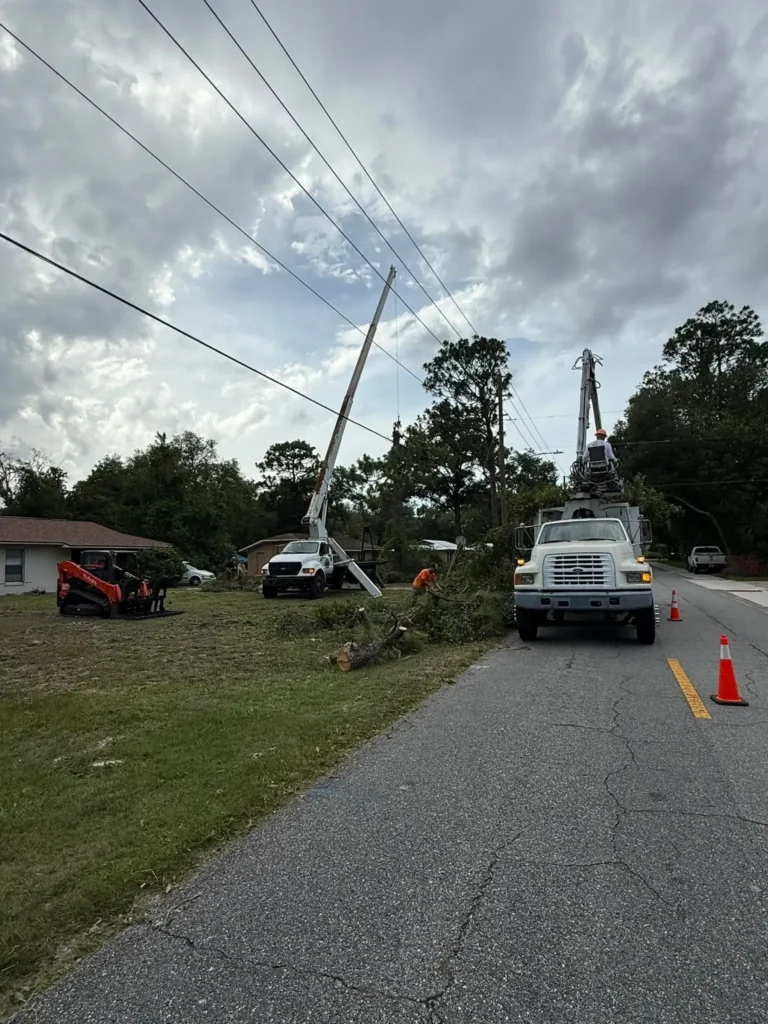
For a threat to life, call emergency services. For a tree near or touching wires, contact the utility and stay away. Do not attempt to clear a blocked route by pulling unstable branches or cutting a tree under tension.
Share useful information safely
Explain whether the tree is standing, leaning, suspended or on a structure. Mention whether people are inside the affected building and whether emergency access is blocked. Photographs are helpful only when they can be taken without entering the hazard area.
Ask how the initial scope will be defined
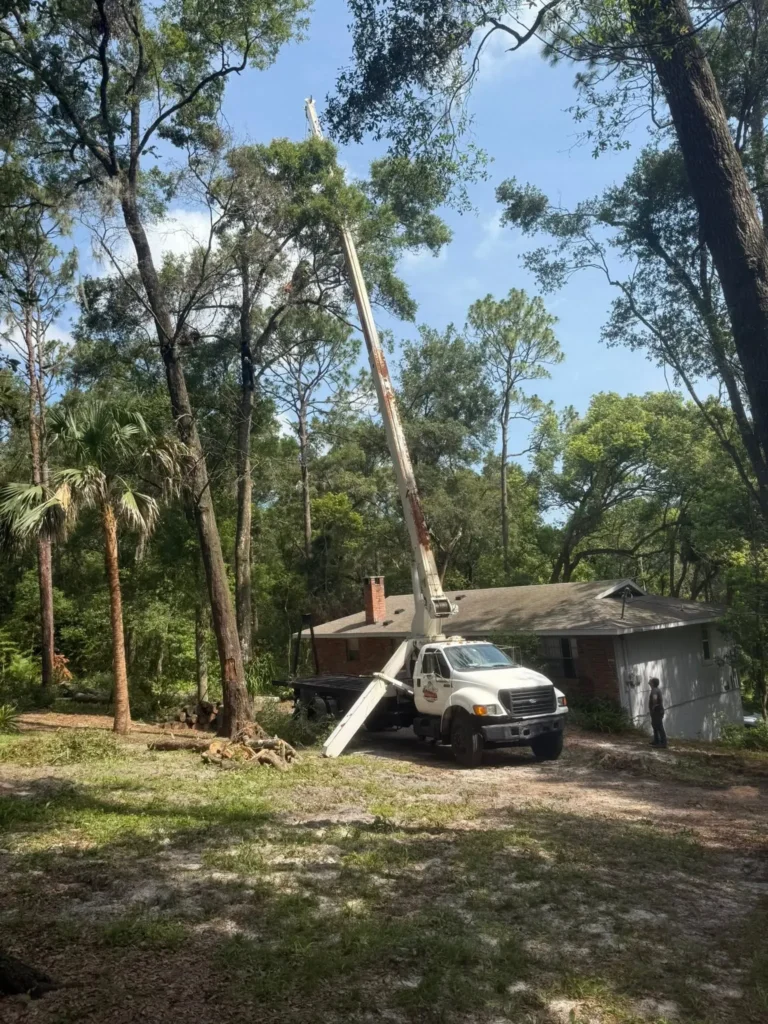
Urgent work may address a specific obstruction or damaged section before a broader cleanup. Ask what is proposed now, what may need further assessment and what conditions must be resolved before the crew can enter. Arrival and completion depend on the actual situation.
Keep costs and coverage separate
Request the work scope, debris handling and payment arrangements. There is no standard emergency price that fits every tree or access condition. If an insurance claim is involved, retain documentation and ask the insurer about coverage rather than assuming reimbursement.
Plan the next step after the hazard response
Ask whether remaining trees or damaged sections need another assessment. Stump treatment, landscape restoration and nonurgent pruning can be discussed as separate tasks. Confirm availability directly with Volusia Bobcat & Tree Service.
Related services and planning guides
Sanford removal planning · Insurance and tree damage
Helpful references
OSHA tree-care hazards · NAIC homeowners insurance
Volusia Bobcat & Tree Service offers a price-match guarantee and a 100% satisfaction guarantee. Ask for the applicable terms with your written estimate.