In this guide: Keep clear of suspended and damaged branches · Treat electrical involvement as a utility issue · Do not turn elevated cutting into a DIY task · Verify credentials and coverage separately · Prepare access without entering the work zone
Keep clear of suspended and damaged branches
Do not stand below broken limbs or try to pull them free. A damaged branch can move unexpectedly, and the area directly beneath it may not be the only exposed space. Keep children, visitors and pets away while arranging professional help.
Treat electrical involvement as a utility issue
Never assume a wire is safe because it looks insulated or a tree appears only close to it. Contact the utility about branches contacting or threatening lines. Appropriate qualifications and coordination are required for work involving electrical hazards.
Do not turn elevated cutting into a DIY task
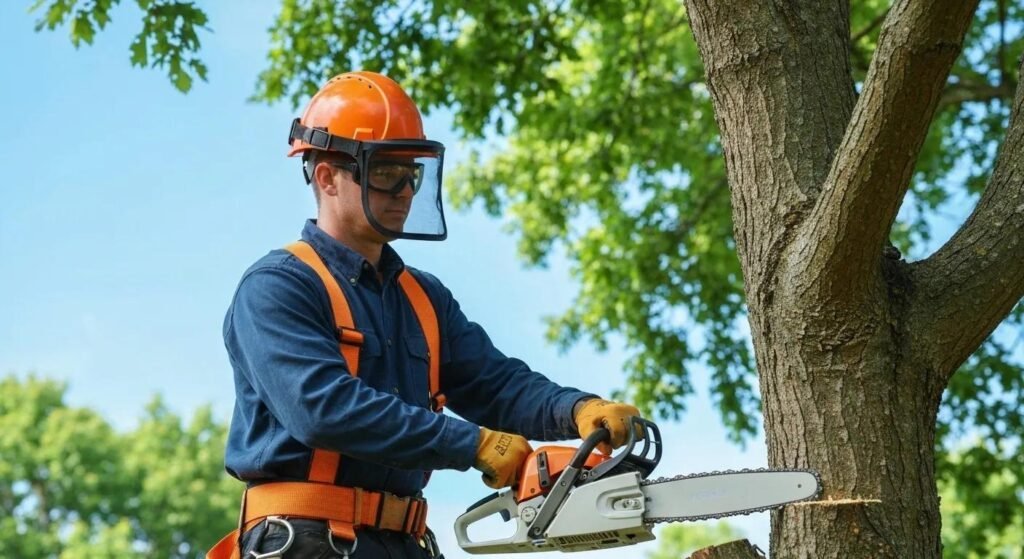
A ladder, rope or protective clothing does not make overhead chainsaw work suitable for an untrained homeowner. Branch weight, tension and the path of falling material must be assessed. Use professionals for climbing, rigging, large limbs and unstable trees.
Verify credentials and coverage separately
Ask who will supervise the work and what qualifications fit the task. If ISA certification is advertised, verify the named individual. Request applicable insurance information as a separate check; certification is not insurance and coverage does not automatically remove homeowner liability.
Prepare access without entering the work zone
Move vehicles and outdoor items before work begins if it is safe. Share information about gates, utilities and sensitive areas. Let the crew establish its operating area and agree how questions or scope changes will be handled.
Related services and planning guides
Warning signs that warrant assessment · Emergency trimming response